

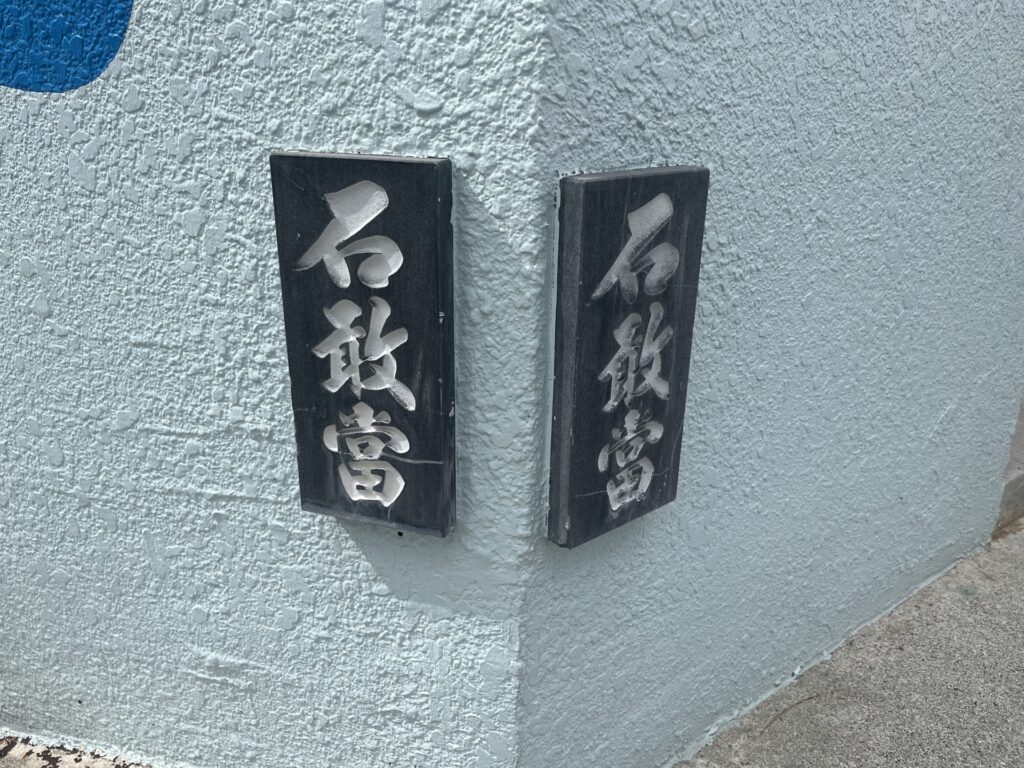
Walking through the streets of Okinawa, you’ll often spot stone monuments inscribed with the characters “Ishiganto” or small lion-like guardian statues called “Shisa” perched on rooftops.
While these customs originated in China before spreading to the Ryukyu Islands (Okinawa) and eventually to Kyushu and mainland Japan, they remain most prevalent in Okinawa. Let’s take a look at the origins and the reasons behind these unique traditions.
Ishiganto: The “Nameplate” Guarding the Streets
The tradition of Ishiganto began in China’s Fujian Province around the 8th century as a way to appease spirits. Though the custom spread through the Ryukyu Islands to Kyushu and even as far north as Hakodate in Hokkaido, Okinawa remains the place where they are most commonly seen today.
Pronunciation and Distribution
- The Name: The most common reading is “Ishiganto.” It is widely believed that this name mirrors the Chinese pronunciation, “Shigandang.” Interestingly, while the kanji character “敢” is usually pronounced “kan” in Japanese, it is read here as “gan” to stay true to its Chinese roots.
- The Numbers: It is estimated that there are over 20,000 of these monuments in Okinawa alone. The next highest concentration is found in the Kagoshima region.
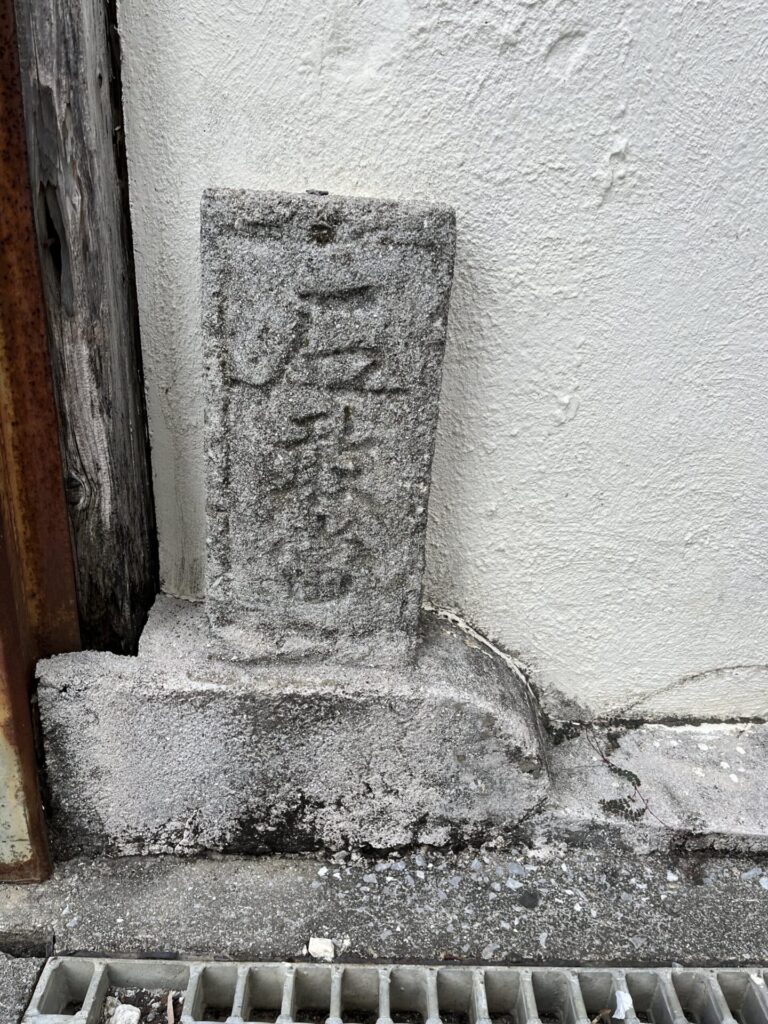
The Purpose: Blocking “Majimun”
The purpose of an Ishiganto is to ward off evil spirits and protect against misfortune. According to local belief, Okinawan evil spirits (known as Majimun) can only move in a straight line. Therefore, these stones are strategically placed at T-junctions, dead ends, and back alleys to block their path.
Typical Specs: Most Ishiganto are roughly the size of a standard door nameplate (approx. 20cm x 9cm) and are predominantly crafted from black granite.
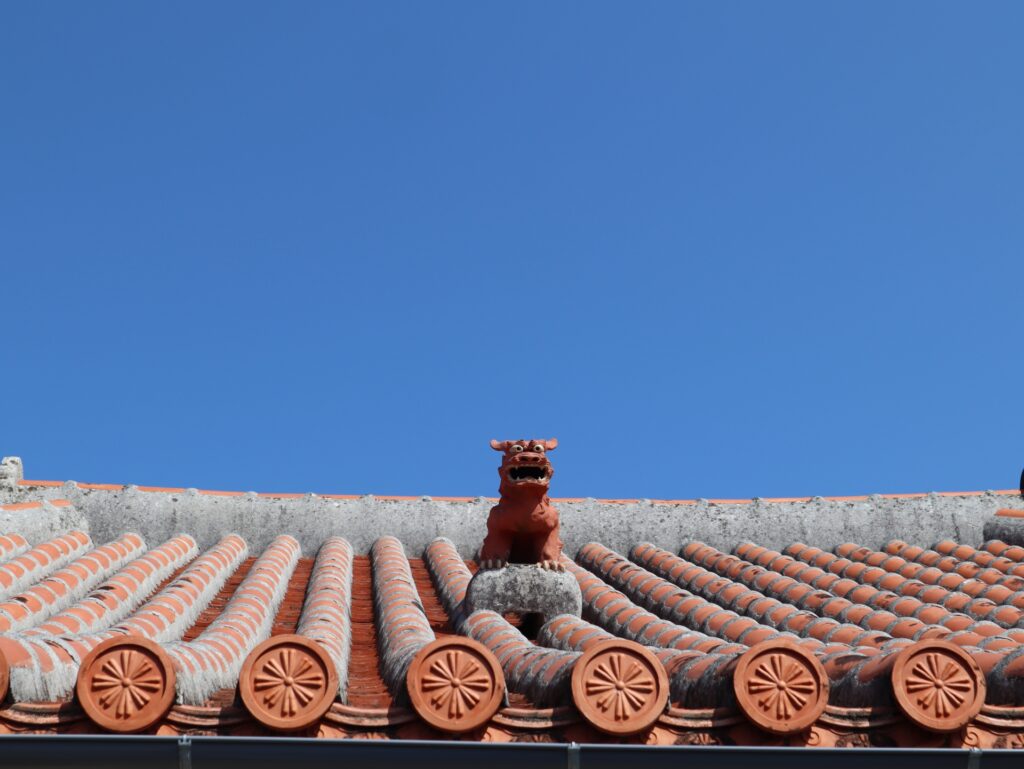
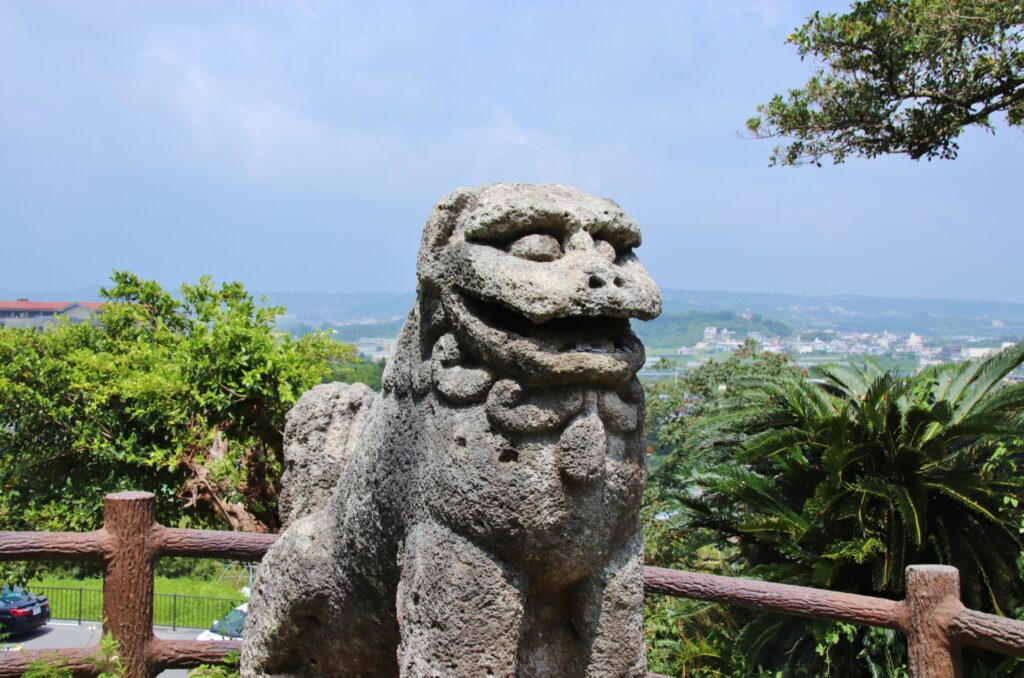
The Shisa: Guardians of the Home
The most iconic Shisa are the red clay statues found on rooftops. These are placed directly above the kitchen to protect the house’s “Hinukan” (God of Fire).
- Rooftop Shisa: These only became common after the Meiji era, when commoners were finally permitted to use tile roofing.
- Pairs: While Shisa were originally solitary figures, they are now typically seen in pairs (male and female) at gates or around estates—a style influenced by Buddhism and the tradition of guardian lions.
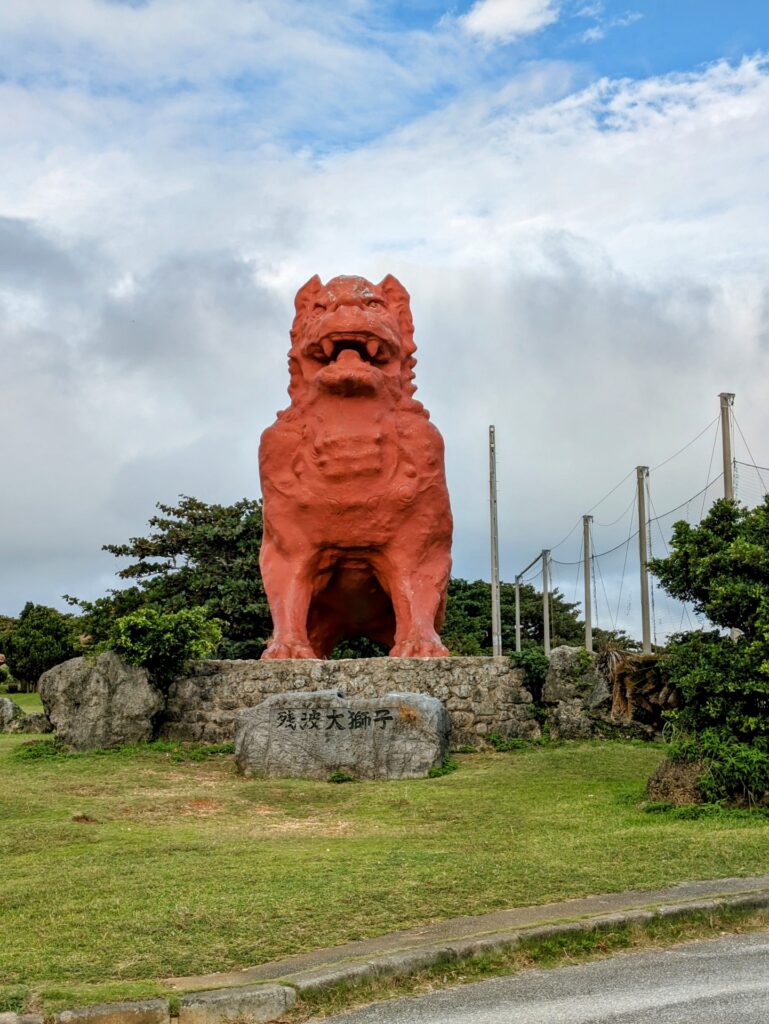
The Zanpa Oyajishi (Great Shisa)
Currently, the largest Shisa in Okinawa is the Zanpa Oyajishi, located at Cape Zanpa Park in Yomitan Village. Erected in 1985, it stands an impressive 8.75m high and 7.8m long. It faces China to honor the history of Yomitan Village, which once flourished through trade with the Chinese Empire during the Ryukyu Kingdom era.
“Shisa Day” is April 3rd
Every year, April 3rd is celebrated as “Shisa Day.” The date was chosen through a play on words: 4 can be read as “Shi” and 3 as “Sa.”
Various events are held on this day, particularly in the Tsuboya district of Naha City, which is considered the birthplace of Okinawan pottery and Shisa.
In 2026. April 3rd falls on a Friday . Since this coincides with spring break, if you happen to be traveling in Okinawa during this time, it’s definitely worth checking out!









Comments