The Boxer Rebellion (also known as the North China Incident) was an anti-foreign, anti-Christian movement that took place between 1899 and 1900, following the First Sino-Japanese War. It was primarily driven by peasants suffering from extreme poverty. At the time, the Qing government not only failed to suppress the unrest but openly and secretly aligned itself with the Boxers.
In June 1900, Boxer forces finally surrounded the Foreign Legation Quarter in Beijing. As they sought to attack the foreigners trapped within the small district, a combined defense force—consisting of troops from Britain, Germany, Russia, the United States, France, and Japan—held their ground in a desperate siege until reinforcements arrived.
The Hero of the Siege: Lieutenant Colonel Goro Shiba
The man who played the most pivotal role in this defense was Lieutenant Colonel Goro Shiba, a military attaché of the Japanese Imperial Army stationed in Beijing. The strict discipline and bravery of the Japanese troops under his command earned the admiration of the world powers.
Notably, Claude MacDonald, the British Minister to China and leader of the besieged foreigners, reported the excellence of the Japanese to his home government. Furthermore, reports by G.E. Morrison, a correspondent for The Times, significantly influenced the eventual realization of the Anglo-Japanese Alliance.
A Life Shaped by Tragedy
Goro Shiba was a Meiji-era soldier born in 1860 as the fifth son of a samurai family in Aizu-Wakamatsu. In 1868, during the Boshin War, pro-Imperial forces (led by Satsuma and Choshu) attacked Aizu. Eight-year-old Goro survived because he was staying at a relative’s villa, but he lost his grandmother, mother, and sisters to ritual suicide at their home outside the castle. This tragedy left a profound, lifelong mark on his soul.
Following the war, the Aizu clansmen were exiled to the remote peninsula of modern-day Aomori Prefecture, where they lived in extreme hardship. Goro, along with his father and brothers, settled in Tanabu (at the foot of Mt. Osore).
After days of indescribable struggle, a glimmer of hope appeared in 1871. Goro was selected to work as an errand boy for the Aomori Prefectural Office to pursue his studies. One can only imagine the joy this brought to his father and the entire family.
Discipline Amidst Chaos
Through many twists and turns, Shiba eventually became an Army officer. Despite the “headwinds” of being from the defeated Aizu clan, he rose through the ranks. When the Boxer Rebellion broke out, he was stationed in Beijing.
The late author Ryotaro Shiba once noted in his reflections on Saka no Ue no Kumo (Clouds Above the Hill):
Goro Shiba is perhaps the quintessential embodiment of that spirit. While some Western garrison forces were prone to loose discipline, the Japanese soldiers led by Shiba were remarkably orderly.
Correcting the Hollywood Narrative
The movie 55 Days at Peking, starring Charlton Heston, depicts the American military taking the lead in holding back the Boxers. However, the reality was quite different. On the ground, while Minister MacDonald oversaw the general situation, it was Lieutenant Colonel Goro Shiba who effectively commanded the multinational defense force of fewer than 500 men.
A Visit to Erin-ji Temple
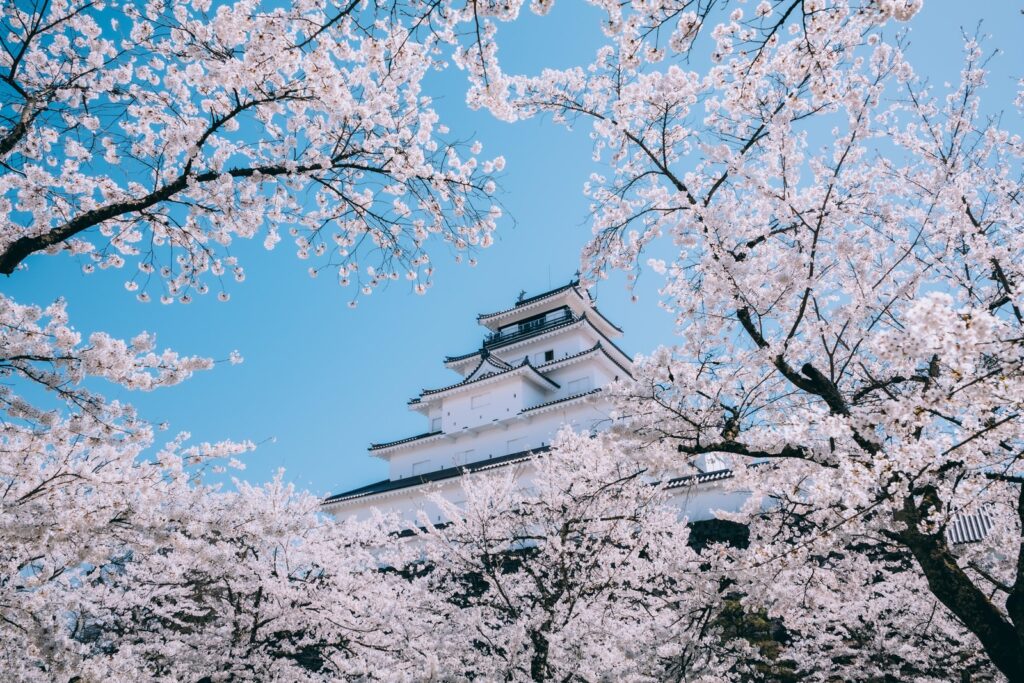
The graves of Goro Shiba and his family are located at Erin-ji Temple in Aizu-Wakamatsu. When I visited last year, it was raining, but I found my way there using a map.
Erin-ji is a Soton-sect temple founded in the late 16th century by the lord Ujisato Gamo, located about one kilometer southeast of Tsuruga Castle. The chief priest confirmed that the Shiba family graves are in the vast cemetery on the hill behind the temple. However, the path was quite steep and muddy. Though I couldn’t reach the grave itself, I felt a sense of peace just passing through the mountain gate of the family’s ancestral temple and praying to the principal deity, Kanzeon Bosatsu.
Closing Thoughts
I titled this post “A Corner of World History” because of the Boxer Rebellion theme, but since the protagonist is the admirable Japanese figure Goro Shiba, perhaps it should be called “A Corner of Japanese History.” As fellow Japanese, I hope we can all take pride in the fact that such a magnificent individual performed so honorably during an event that captured the world’s attention.
The book pictured here is A Record of a Meiji Man (Aru Meijijin no Kiroku, edited by Masato Ishimitsu, Chuko Shinsho), which contains Goro Shiba’s memoirs of his youth. As the book’s promotional band says, it is a true story that “cannot be read without tears.” If you are interested, I highly recommend giving it a read!








Comments