
What is Hinamatsuri?
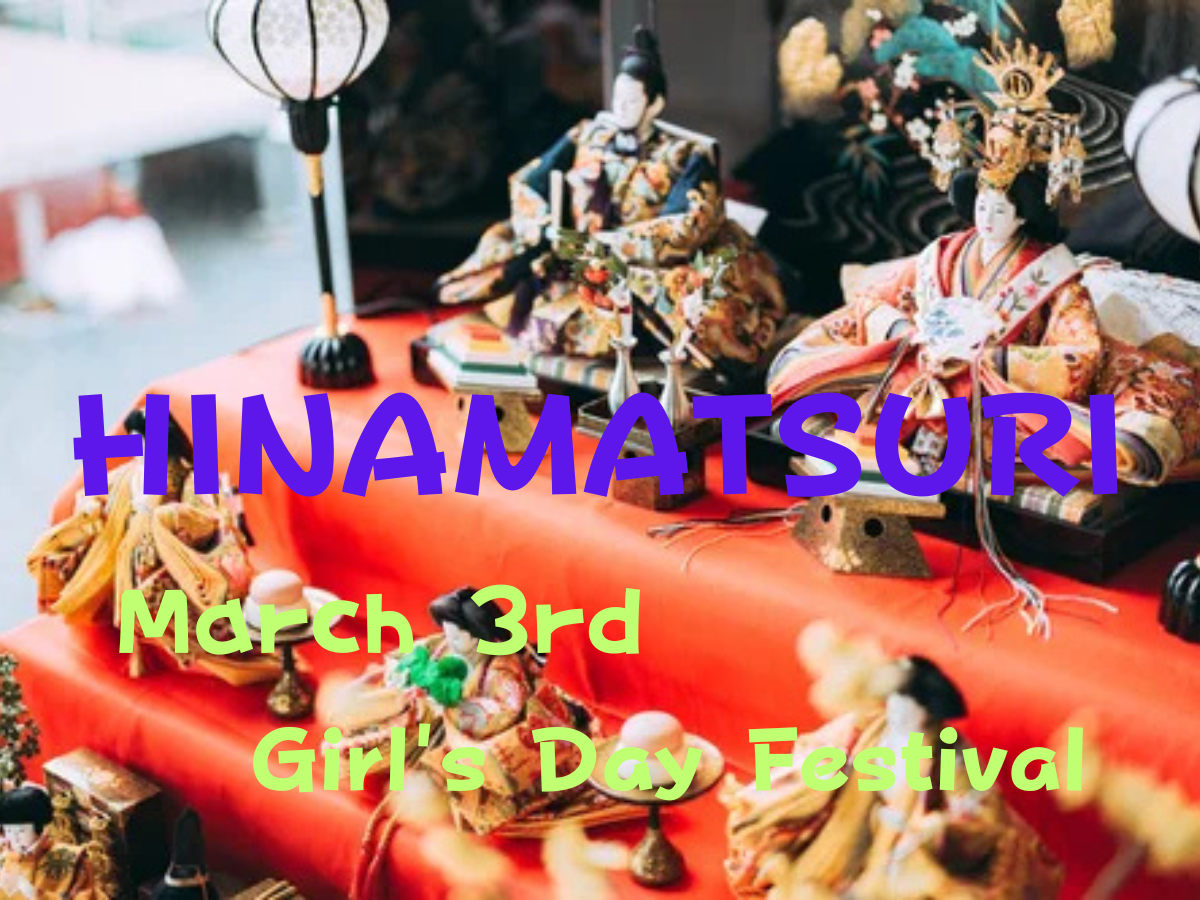
Hinamatsuri, also known as the “Doll Festival” or “Peach Festival” (Momo no Sekku), is a traditional Japanese event held on March 3rd. It is a day to pray for the healthy growth and happiness of young girls. Families with daughters celebrate by displaying “Hina-ningyo” (traditional dolls) and enjoying special festive foods.
The Origins and History of Hinamatsuri
The roots of Hinamatsuri can be traced back to ancient China and the Japanese “Joshi no Sekku” (the seasonal festival of the first day of the Snake in March).
1. Purification Rituals: Historically, it was believed that people could transfer their misfortunes and impurities to paper dolls called “Hitogata” and let them float away down a river (a practice known as Nagashi-bina).
2. Hina-asobi: During the Heian period(794~1185A.D.), noble children enjoyed playing with dolls, a pastime called “Hina-asobi.” Over time, these two traditions merged.
3. From Ritual to Celebration: By the Edo period(1603~1868A.D.), doll-making techniques improved, and the practice shifted from floating dolls away to displaying them grandly on tiered platforms. This evolution led to the modern Hinamatsuri style we see today.
Traditional Decorations
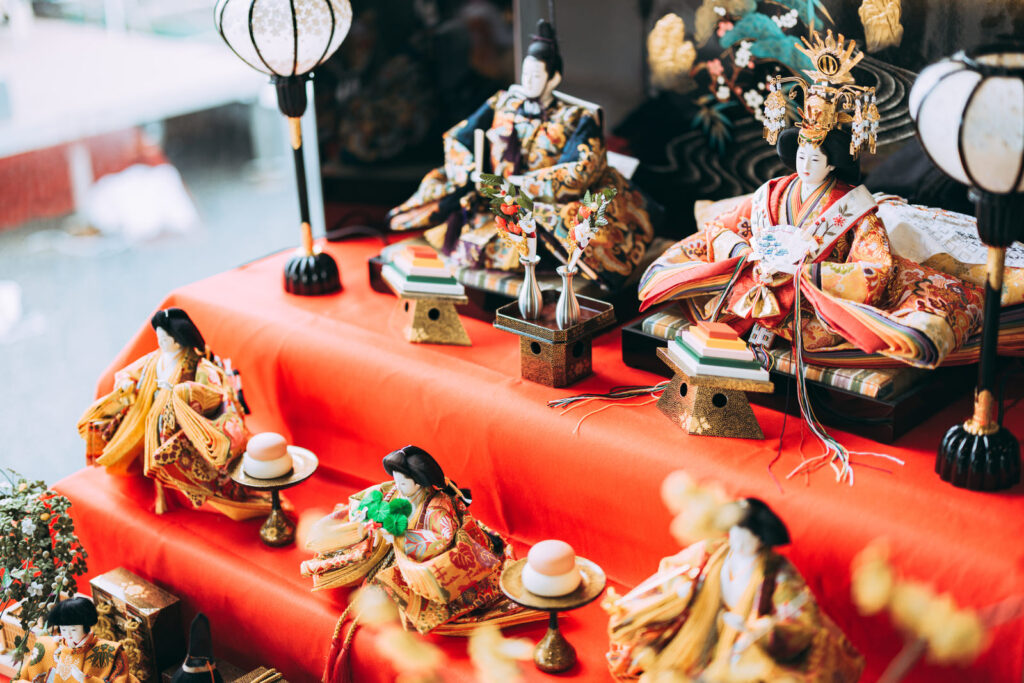
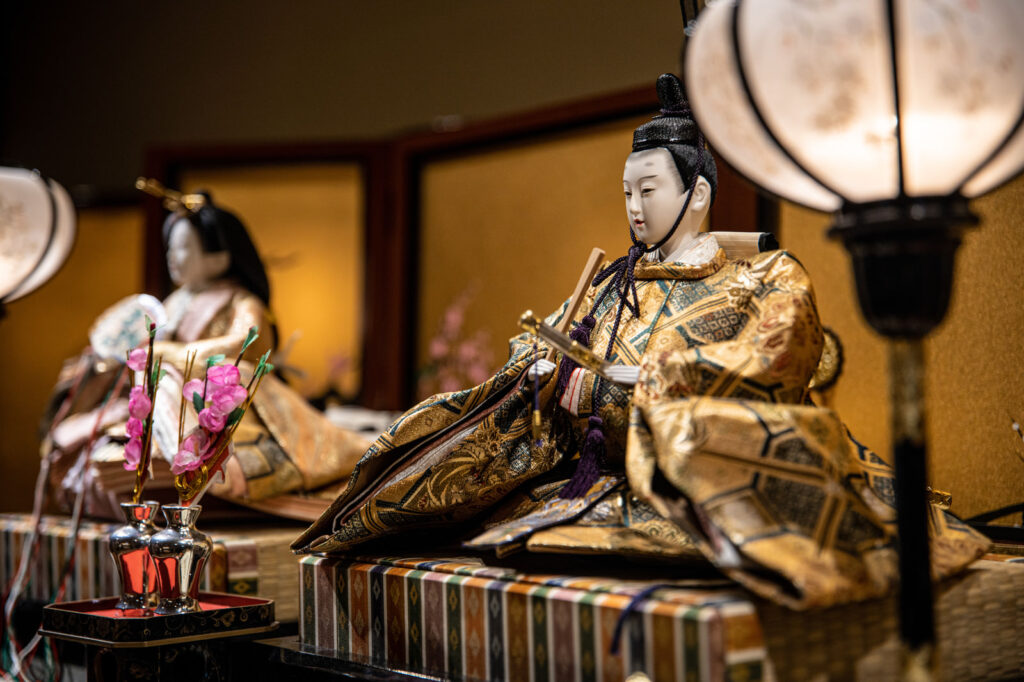
• Hina-ningyo (Hina Dolls): The dolls represent a wedding from the Heian period imperial court.
• Obina and Mebina: The Emperor and Empress dolls, placed at the top.
• Sannin Kanjo: The three court ladies who serve the Emperor and Empress.
• Gonin Bayashi: The five court musicians.
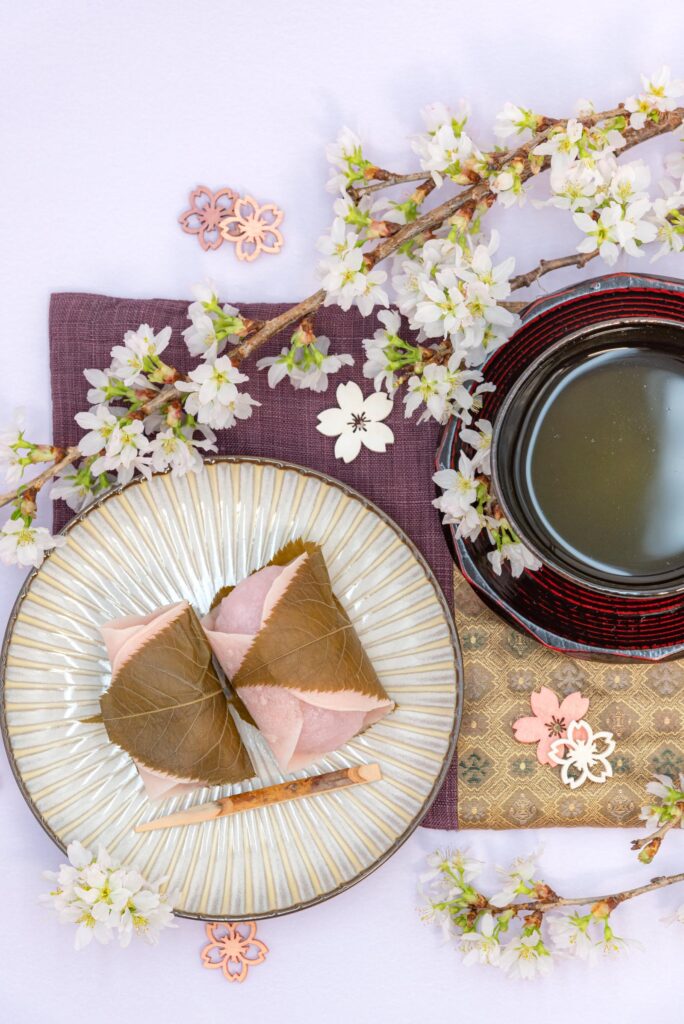
• Peach Blossoms: Since the lunar calendar’s March 3rd coincided with the blooming of peach trees, and peaches were believed to have the power to ward off evil spirits, they became a symbol of the festival.
Traditional Festive Foods
• Hishimochi: Diamond-shaped rice cakes with three layers: pink (to ward off evil), white (purity/snow), and green (health/new buds).
• Hina-arare: Bite-sized colored rice crackers. The four colors (pink, green, yellow, and white) are said to represent the four seasons.
• Chirashizushi: A colorful “scattered” sushi
topped with auspicious ingredients like shrimp (longevity) and lotus root (a clear view of the future).
• Hamaguri (Clam) Soup: Clam shells come in pairs that fit perfectly together, symbolizing the wish for the daughter to find a life partner with whom she will be perfectly matched.
When to Display and Put Away the Dolls
It is common to start displaying the dolls from “Risshun” (the beginning of spring, around February 4th) or by mid-February. A well-known superstition suggests that if you do not put the dolls away promptly after March 3rd, the daughter will marry late. This originates from the idea that the dolls have absorbed the girl’s bad luck and should not be kept out for too long.
Similar customs around the world that celebrate girls
Global Traditions Celebrating the Growth of Girls
Aside from Japan, various customs around the world celebrate the growth and health of young girls. Here are a few notable examples:
Mexico: Quinceañera
In Mexico, when a girl turns 15, a grand celebration called a Quinceañera is held. This is a milestone event marking her transition into womanhood, often involving a lavish party with family and friends. Typically, the girl wears an elaborate gown, performs traditional dances, and enjoys specially prepared food and cake.
Spain: Santas
Spain also has traditional events to celebrate a girl’s coming of age. The Santas (or similar local feast days) are often tied to Catholic traditions and celebrated when a girl reaches a certain age. These ceremonies include a blessing by a priest and a gathering of loved ones. It is a time for joy, filled with traditional dishes and festive sweets.
Serbia: Bačela
In Serbia, there is a custom known as Bačela, which celebrates a young woman’s path toward marriage and adulthood. This event signifies her maturity and serves as a prayer for her future happiness, often featuring traditional songs and dances. Food plays a central role as family and friends gather to celebrate.
India: Garga (Gauri Pujan/Local rites)
In parts of India, specific rituals like Garga (or similar regional ceremonies) are performed to celebrate a girl’s well-being. These rites are meant to pray for her health and prosperity. Special altars are often decorated with offerings of flowers and fruits, and it is common for the entire family to come together in celebration.
Conclusion
While these rituals and traditions vary greatly by country and region, they all share the common goal of celebrating a girl’s growth. Beyond the ceremonies themselves, these customs highlight the deep importance of bonds between family and the community.








Comments