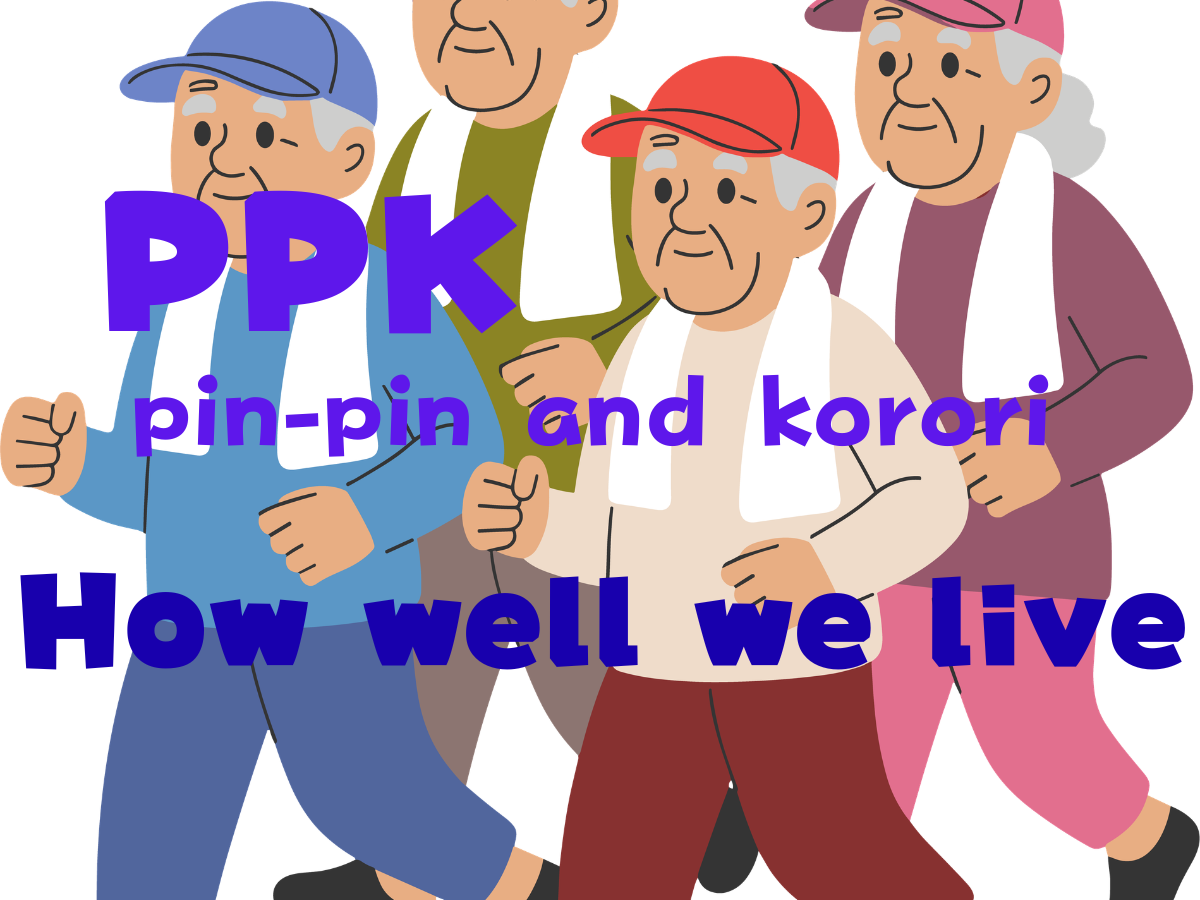
In the lexicon of Japanese longevity, there is a popular onomatopoeic phrase that captures the ultimate life goal for many seniors: “Pin-Pin-Korori,” or simply PPK.
While it might sound lighthearted, it carries a profound meaning regarding how we view aging and human dignity.
Decoding the Sound: Pin-Pin and Korori
The phrase is a combination of two distinct Japanese expressions:
- Pin-Pin: This describes someone who is full of energy, lively, and robust. It’s the image of a senior walking briskly, engaging in hobbies, and living independently.
- Korori: This refers to a sudden or easy transition—in this context, passing away peacefully and quickly without a long, bedridden struggle.
Essentially, PPK represents the desire to “live vibrantly and depart peacefully.”
The Significance: Quality Over Quantity
The significance of PPK lies in the gap between Average Life Expectancy and Healthy Life Expectancy. In Japan, there is often a 9- to 12-year period at the end of life where individuals require nursing care or face significant physical restrictions.
PPK is the cultural movement to shrink that gap. Its significance is three-fold:
- Individual Dignity: It prioritizes a high quality of life (QOL), allowing individuals to remain the protagonists of their own lives until the very last moment.
- Family Wellness: By staying healthy (Pin-Pin), seniors reduce the emotional and physical exhaustion often experienced by family caregivers.
- Social Sustainability: On a macro level, the PPK ideal helps alleviate the mounting pressure on national healthcare systems and medical expenditures.
How to Achieve the “Pin-Pin” State
The Japanese approach to PPK isn’t about avoiding death, but about embracing a proactive lifestyle. It encourages:
- “Shoku-iku” (Dietary Education): Balanced nutrition to prevent frailty.
- Social Connection: Staying engaged with the community to prevent cognitive decline.
- Moderate Exercise: Maintaining muscle mass to stay mobile.
Conclusion
“Pin-Pin-Korori” isn’t just a catchy slogan; it is a philosophy of life that shifts the focus from “how long we live” to “how well we live.” By striving for a PPK lifestyle, we honor our health today to ensure a graceful and dignified tomorrow.




Comments