
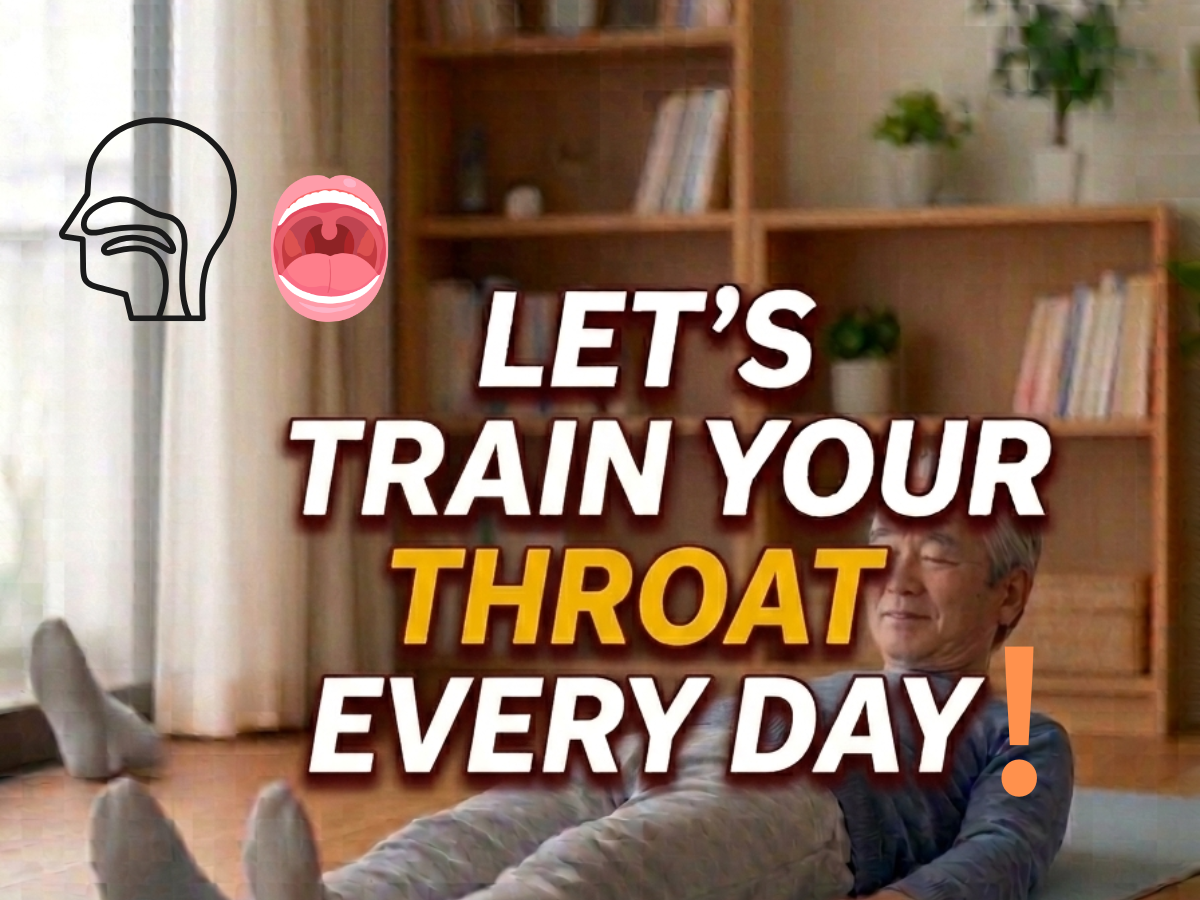
It is no exaggeration to say that the throat is the key to longevity.
Pneumonia is consistently a leading cause of death in Japan, and in many cases, it is triggered by “aspiration pneumonia” caused by declining throat function. When throat muscles weaken, food and bacteria can easily enter the windpipe instead of the esophagus, increasing life-threatening risks.
Keeping your throat youthful is your “lifeline” for enjoying delicious meals, engaging in fun conversations, and breathing strongly. Here is a summary of specific ways you can start strengthening your throat today to prevent decline.
1. Exercises to Directly Train Throat Muscles
There are many muscles around the throat, but training to maintain “swallowing power” is particularly effective.
- Shaker Exercise (Head Lift) Lie flat on your back and lift only your head to look at your toes. Hold for 30 to 60 seconds. This powerfully strengthens the muscles that support swallowing (infrahyoid muscles).Just lie on your back with your hands behind your head—it’s surprisingly easy and incredibly effective!
- Forehead Push Exercise Place your palm against your forehead and push against each other while looking toward your belly button. Apply pressure for 5 seconds and repeat several times. This strengthens the muscles that lift the Adam’s apple.
- “A-I-U-Be” Exercise Exaggerate your mouth movements while saying “Ah,” “Ee,” “Oo,” and “Be” (sticking your tongue out). This works not only the throat but also the muscles around the mouth and tongue, improving swallowing function.
2. “Throat Care” in Daily Life
You don’t need a special workout slot; you can care for your throat through daily habits.
- Karaoke, Reading Aloud, and Chatting Using your voice is the best throat workout. Singing loudly or reading books with emotion helps the opening and closing movements of the throat stay smooth.
- Conscious Swallowing During meals, practice swallowing firmly and consciously. You can also practice “dry swallowing” (swallowing saliva) intentionally.
- Laugh Often The act of laughing stimulates the throat and diaphragm, improving respiratory function.Comedy shows and live theater are highly recommended. Let’s laugh heartily from the bottom of our hearts!
3. Maintaining the Throat Environment (Boosting Defense)
Beyond muscle, hygiene and moisture are crucial.
- Thorough Oral Care By reducing bacteria in the mouth, you lower the risk of pneumonia even if accidental aspiration occurs. Brushing after every meal and tongue cleaning are essential.
- Frequent Hydration When the throat is dry, the “ciliary movement” that expels foreign objects slows down. Keep your throat moist with small, frequent sips of water.
- Proper Eating Posture Tuck your chin slightly and sit up straight while eating. This physically makes it harder for food to go down the wrong way.
Check for Signs of Throat Decline
If you notice any of the following, it’s time to focus on throat training:
Self-Check for “Throat Aging” (Possible Dysphagia)
- Choking during meals.
- Coughing while eating.
- Increased phlegm during or after meals.
- Eating more slowly, even though your teeth are fine.
- Difficulty swallowing in one go (having to swallow several times for one mouthful).
- Choking on liquids.
- Difficulty swallowing pills.
- Losing weight despite eating regularly.
Throat decline is said to begin gradually in your 40s and 50s. “Saving up throat muscle” while you are healthy will greatly impact your future Quality of Life (QOL).
Why not start by doing the “A-I-U-Be” exercise three times before your meal tomorrow? Or, when you have a moment (and we always have a little time, don’t we?), just lie down and lift your head to look at your toes for 30 seconds.
Even that small habit can make a world of difference!









Comments