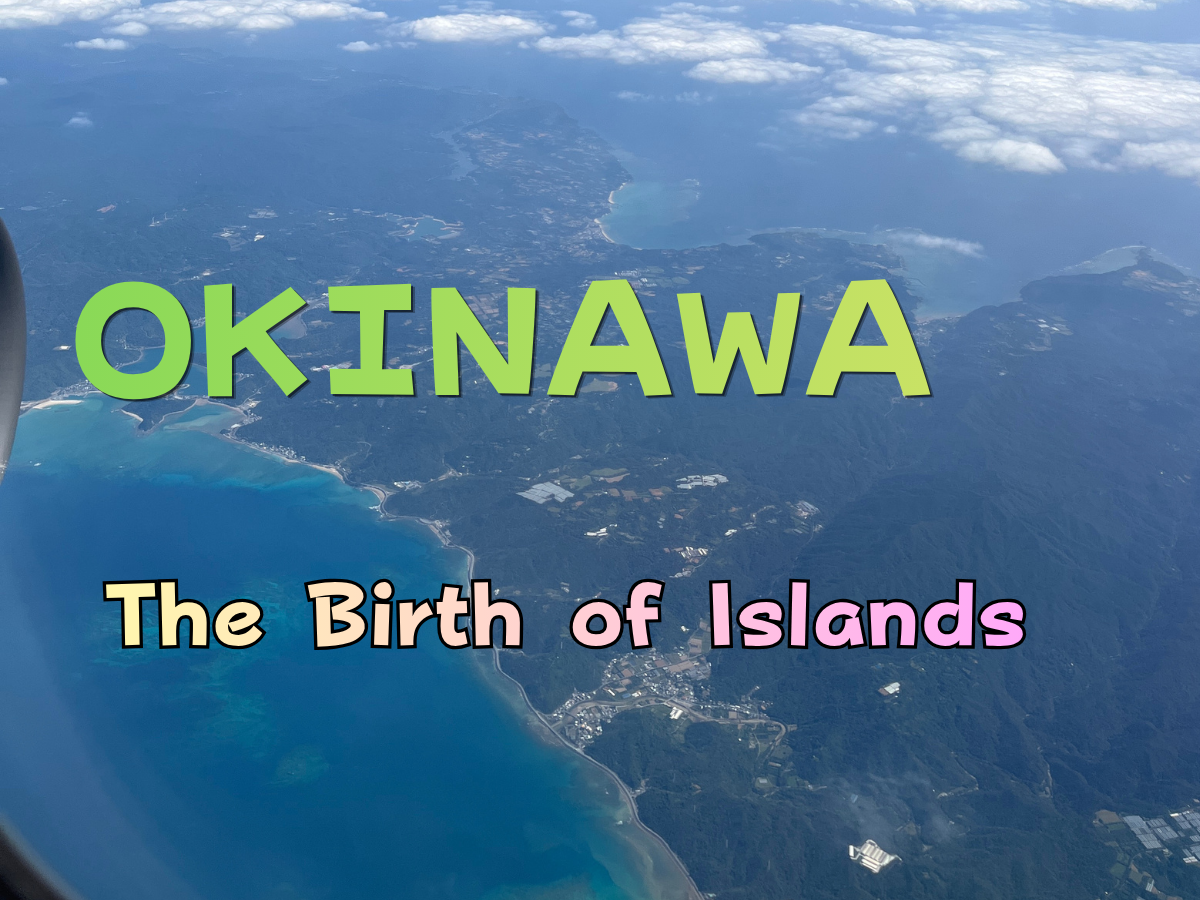
Second Home in Okinawa
I am someone who suffers from absolutely terrible hay fever. For many years, I was plagued by cedar and cypress pollen every spring.
My escape from this misery began about 13 years ago. I came across an article—I can’t recall if it was on TV or in a weekly magazine—that said: “If you want to escape cedar pollen, just go somewhere it doesn’t exist. Places like Okinawa and Hokkaido don’t have cedar or cypress trees planted, so there’s no pollen.”
I thought, “That’s it! But Hokkaido is too cold this time of year, so I’ll head to Okinawa.” Acting on that impulse, I took my first-ever trip to Okinawa in late March of that year.
It was a four-day, three-night “experimental” stay in Naha City. Of course, while I was there, the sneezing stopped completely. I was so overjoyed I felt like I had found “a Buddha in hell” (a godsend)! I decided right then that starting the following year, I would spend at least a month in Okinawa. During those three days, I put sightseeing aside and spent my time roaming Naha, searching for a budget-friendly yet comfortable place to stay.
Fortunately, I found a great spot in Naha where I could stay for a month for less than 100,000 yen. Since then, I’ve spent time in Okinawa—mostly in Naha—every year. While I had to endure staying home in 2021 and 2022 due to the pandemic, I finally returned in 2023 for the first time in three years. I forgot all about pollen and enjoyed two full months of Okinawan life from late February to late April.
My plan going forward is to save up during the rest of the year so I can continue spending the pollen season in Okinawa!
How the Okinawa Islands Were Born
Because hay fever brought me to Okinawa, I decided to study the region’s geography and history to better understand the place that takes such good care of me. Today, I’d like to share what I’ve learned about how the Okinawa Islands (centered around the main island) were formed.
As I briefly mentioned in my “Upside-Down Map” post regarding the birth of the Japanese archipelago, about 30 million years ago, the heavy Pacific Plate (100 km thick) began to subduct. This caused the eastern edge of the Eurasian continent to tear away, forming the prototype of Japan.

In Western Japan, including Kyushu and Okinawa, the Philippine Sea Plate moved in from the south to “complement” the subducting Pacific Plate. Between central Honshu and Kyushu, layers of hot magma slipped underground, eventually erupting onto the surface in massive caldera-style explosions. This released incredible energy over a wide area. A classic example still visible today is the Aso caldera in Kumamoto.
Additionally, Yakushima, located south of Kagoshima, is said to be an uplifted mass of granite—essentially cooled magma. Since granite is less dense than its surroundings, it moves upward over eons, pushing up the Earth’s crust to form the mountain ranges we see today.
The Unique Evolution of the Ryukyu Arc
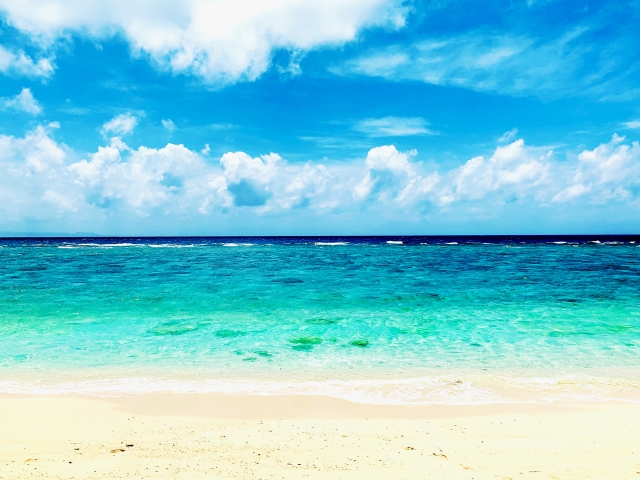
On the other hand, the Okinawa Islands south of Kyushu were formed differently. Instead of hot magma layers, a “cooler” section of the Philippine Sea Plate subducted. Consequently, no volcanic belt was formed. Instead, for 200 million years, the area underwent a repeated process of merging with and separating from the continent.
About 5 million years ago, a sea called the “Shimajiri Sea” formed between the Ryukyu Arc and the continent. From 2 million years ago to the present, the deep Okinawa Trough—a massive rift from the continent—was formed. This deep trough lies on the northern side of the Ryukyu Islands, separating them from the mainland.
Between 400,000 years ago and the end of the last Ice Age (about 20,000 years ago), the southern Ryukyu region was occasionally connected to the continent by land bridges. However, as the Ice Age ended and sea levels rose, the land shrank. By 9,500 years ago, coral reefs uplifted, creating the prototype of the current Ryukyu Islands.
Interestingly, the Minatogawa Man (found on Okinawa Island and dating back 20,000 years), considered among the oldest human remains in Japan, is thought to have traveled from the continent via these shifting land bridges. Furthermore, animals like the Iriomote cat, the Habu snake, and the Okinawa rail migrated from the continent during the Ice Age. Once the land was cut off, they evolved within an isolated environment to form a unique ecosystem.
Starting the “Okinawa Story” Series
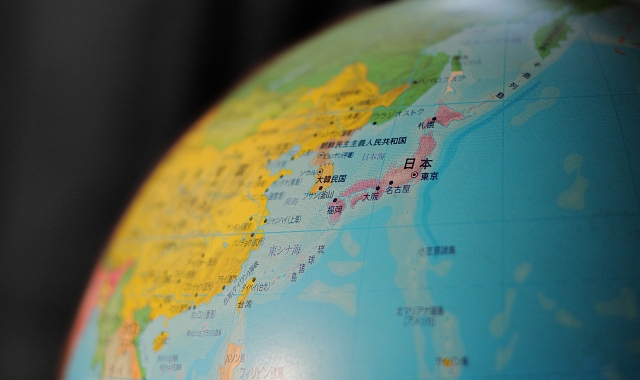
The Ryukyu Islands have undergone such dramatic changes over an almost unfathomable amount of time. In this blog, I plan to take my time exploring Okinawa—primarily the main island—from various angles, including its geography, climate, history, and culture. I hope you’ll join me on this journey!






Comments