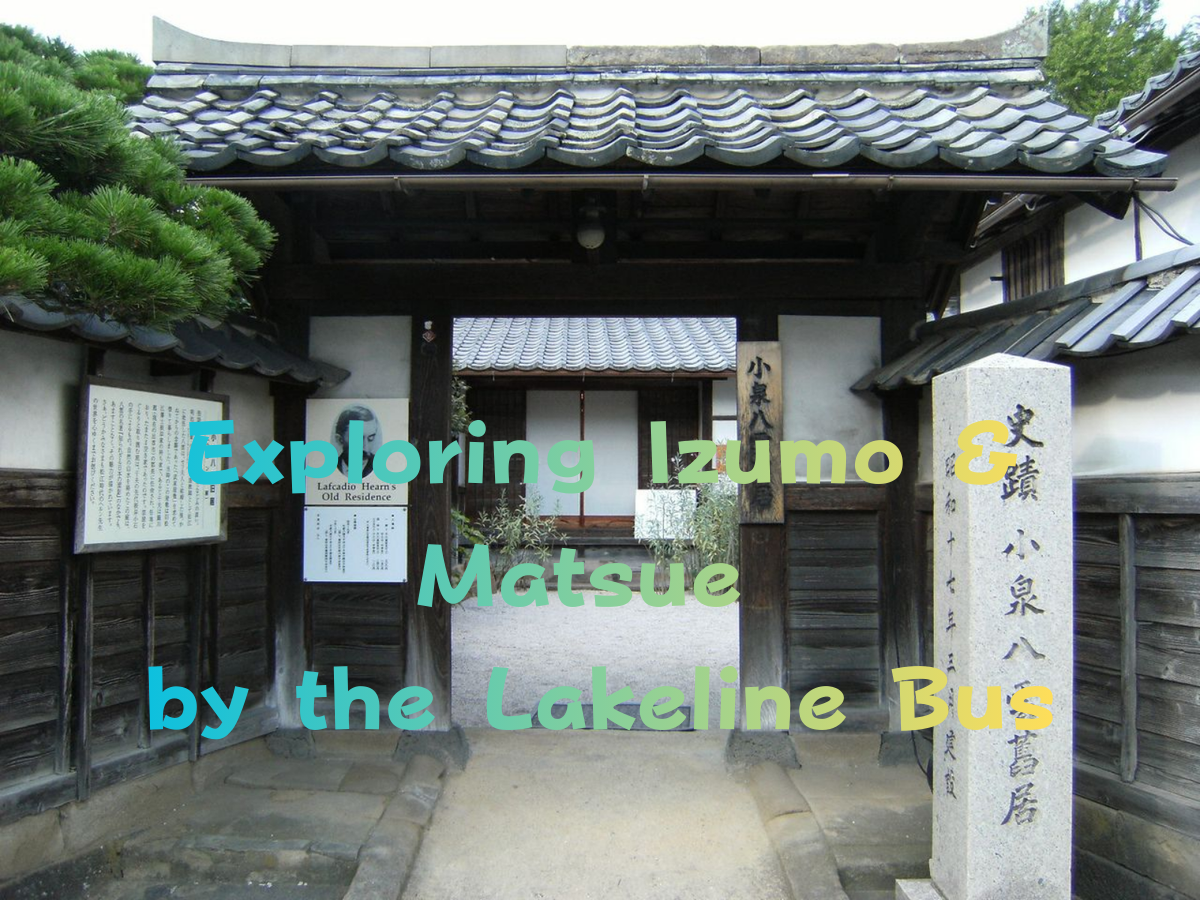
After exploring the Adachi Museum of Art and other sites, I returned from Yasugi to Matsue. I headed straight to a corner of the city lined with former samurai residences surrounding Matsue Castle. There, I visited the house where Lafcadio Hearn lived during his stay in Matsue.
Although Hearn lived in various cities like Kumamoto and Tokyo after moving to Japan, this residence facing Matsue Castle is the only one that remains exactly as it was back then.
Getting Around: The “Lakeline” Bus
From Matsue Station, the municipal “Gurutto Matsue Lakeline” bus is incredibly convenient. As the name suggests, it circles the city’s major sightseeing spots.
I crossed the Matsue Ohashi Bridge over the Ohashi River, which flows into Lake Shinji, and arrived at the “Lafcadio Hearn Memorial Museum” stop in less than 20 minutes. Since it’s a loop bus, the return trip to the station takes about 30 minutes, passing by Gessho-ji Temple (the family temple of the Matsudaira clan), Matsue Shinji-ko Onsen, and Sunset Park. However, you’ll never get bored; the onboard videos provide detailed explanations of each stop, making it feel like a guided sightseeing tour.
Who was Lafcadio Hearn (Koizumi Yakumo)?
For those who may not know, here is a brief look at the life and legacy of the man who visited Meiji-era Japan as a correspondent.
- His Life: Born on the Greek island of Lefkada, he was raised in Ireland and the United States. He moved to Japan in 1890 and eventually settled in Matsue. Though he stayed in Matsue for only a little over a year before moving to Kumamoto and finally Tokyo, it was here that he met his wife, Setsu Koizumi, and deeply fell in love with local customs.
- His Legacy: 1. Preserving Folklore: He translated Japanese myths and legends into English. His famous works, Kwaidan: Stories and Studies of Strange Things and Japanese Ghost Stories (featuring tales like “Hoichi the Earless” and “Rokurokubi”), brought Japanese culture to a global audience.2. Cultural Bridge: His writing showed a profound understanding of Japanese traditions, religion, and spirit, acting as a bridge between the East and the West.3. Poetic Style: His prose is known for being emotional, lyrical, and meticulously descriptive, especially regarding the landscapes and people of Japan.
Stepping into History: The Hearn Residence
Getting off the bus, you’ll find the Memorial Museum and, right next door, the Former Residence of Lafcadio Hearn (also known as the “Hearn Old Residence”). The area retains the quiet, dignified atmosphere of an old samurai district.
Since I was on my way back from the Adachi Museum and short on time, I focused my visit on the residence where Hearn lived with his wife, Setsu.
- Admission: 310 yen for adults (A combined ticket for both the residence and the museum is available for 560 yen).
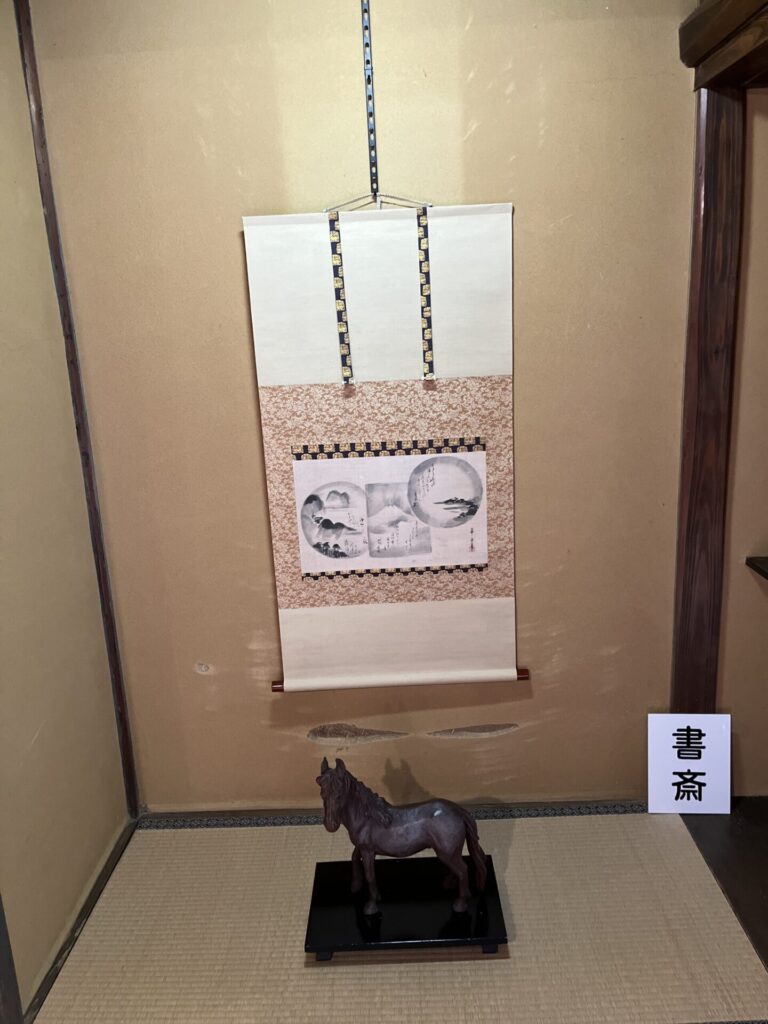
This samurai house sits on a plot of about a quarter-acre lot. You can view Hearn’s study and Setsu’s room, as well as the beautiful Japanese garden.
A Glimpse into his Work:
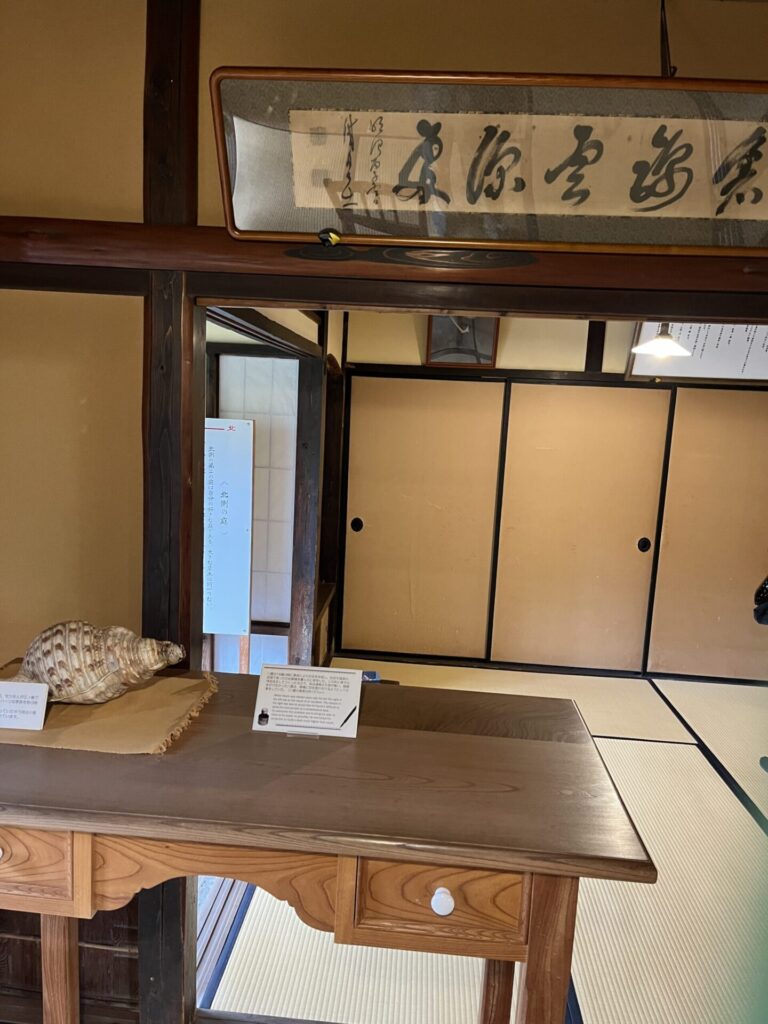
The most striking thing in the room was his writing desk. While a standard desk is about 2feet 4 inches high, Hearn’s was roughly 3feet , paired with an exceptionally tall chair. Hearn was short (about 5 feet 2 inches ), and had lost sight in his left eye during his youth; he was also severely nearsighted in his right. I could almost see him perched on that high chair, his face pressed close to his notebook, writing with intense focus.
Closing Thoughts
It was a nostalgic moment to stand where the man I learned about in school actually lived. The “Lakeline” bus also tempted me to hop off at many other spots, like the “Karakoro Art Studio” (a renovated former Bank of Japan building).
If you are planning a trip to Izumo, I highly recommend spending some time in Matsue to walk in the footsteps of Lafcadio Hearn!
The article below is an explanatory article about Lafcadio Hearn created by Hoshino Resorts , a leading Japanese leisure facility operator
-1.jpg)







Comments