
Introduction: The Magic of Numbers
“Billions & Billions” , Although Carl Sagan famously claimed he never actually uttered that exact phrase in those words on Cosmos, it became the heartbeat of his legacy. In his final book, Billions & Billions: Thoughts on Life and Death at the Brink of the Millennium, Sagan invites us to look at the staggering scale of the universe—not to make us feel small, but to make us feel significant.
The Universe in Our Veins
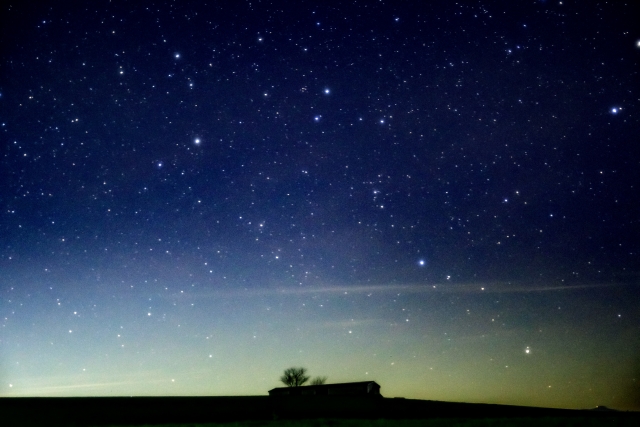
When we look at the stars, we aren’t just looking at distant lights; we are looking at our ancestors. One of the core themes of Sagan’s work, and a key takeaway from the nature of stars, is that we are literally “starstuff.” The iron in your blood and the calcium in your teeth were forged in the heart of a dying star billions of years ago.
Understanding the life cycle of stars—from nebulae to supernovae—is not just an academic exercise in physics. It is a journey of self-discovery. As explored in the insights from MultiPoints, realizing our cosmic origin changes how we view ourselves and our neighbors.
The Responsibility of the “Pale Blue Dot”
Sagan’s brilliance lay in his ability to pivot from the infinite to the immediate. He used the “billions” of galaxies as a backdrop to highlight the fragility of our own planet. In the latter half of his final essays, he shifted focus to the global challenges we face: climate change, nuclear proliferation, and the importance of rational thought.
In an era of misinformation, Sagan’s “Baloney Detection Kit” is more relevant than ever. He argued that science is not just a body of knowledge, but a way of thinking—a “candle in the dark” that protects us from the shadows of superstition and shortsightedness.
Why It Matters Today
Why should we care about the “nature of stars” in 2026 ? Because a cosmic perspective is the ultimate equalizer. When you view Earth from the edge of the solar system, there are no borders, no ethnic divisions, and no religious conflicts. There is only a tiny, fragile blue speck in a vast cosmic dark.
As we navigate the complexities of the 21st century, we must remember Sagan’s plea: to deal more kindly with one another and to preserve and cherish the only home we’ve ever known.

Conclusion: Joining the Cosmic Dance
The universe is vast beyond our comprehension, but it is also knowable. By studying the stars, we learn the laws of nature that govern everything from the smallest atom to the largest galaxy.
Let us look up at the night sky not with fear of the unknown, but with the curiosity of a species that has just begun to find its way among the stars. After all, we are the way the cosmos knows itself.








コメント