1. The Power of a 180-Degree Turn
Since our elementary school days, we have been conditioned to see the world through a single lens: North is “up,” and South is “down.” However, during my ten years involved in promoting Pan-Japan Sea trade starting in 1998, I encountered a map that shattered this preconception.
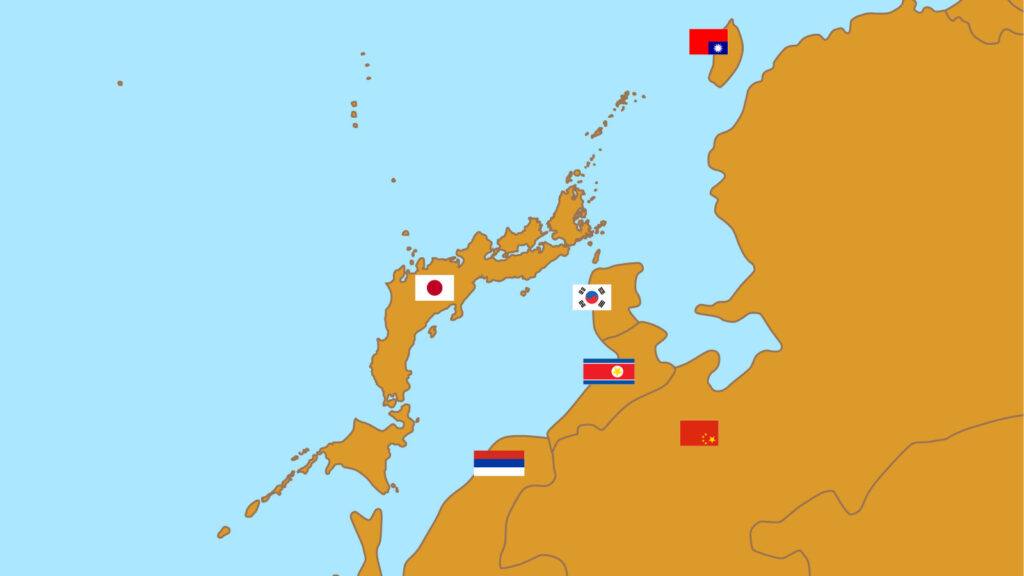
It was the “Inverted Map” (or the Pan-Japan Sea Perspective Map). Looking at the Japanese archipelago from the perspective of the Asian continent—peering from North to South—I was struck by a profound sense of revelation. I realized how a simple change in angle could create such a radically different perception of the same region.
2. Japan as the “Outer Garden” of the Continent
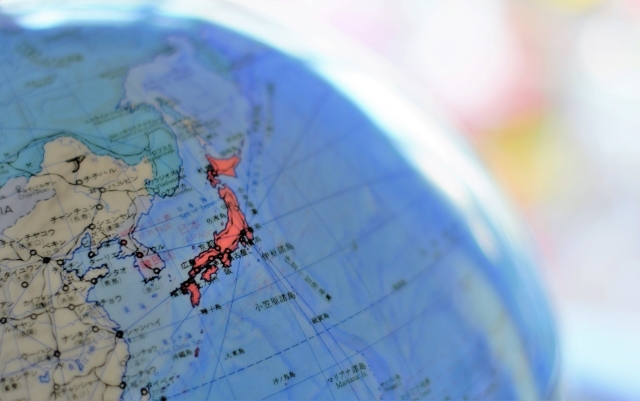
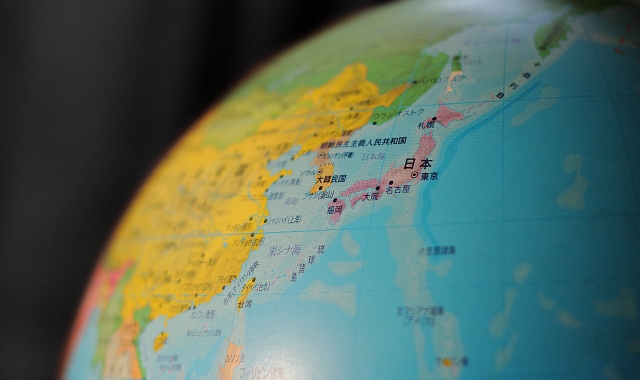
I encourage you to try this: take a world map and turn the Far East upside down. Look from the Siberian plains toward the Pacific Ocean. Or, if you have a globe, look down from the North Pole and rotate it to view Japan from the Eurasian continent.
From this vantage point, Japan no longer looks like an isolated island chain. Instead, it appears as a grand “Outer Garden” (Soto-en) of the continent, acting as a natural breakwater that transforms the Sea of Japan into a vast, protected “inland sea.”
3. A 50-Million-Year Geological Drama
The distinctive “inverted-V” (or boomerang) shape of Japan is not a mere accident; it is the result of a violent, 50-million-year geological drama.
Long after the dinosaurs vanished, the land that would become Japan began to break away from the mainland. Around 1500 million years ago, East and West Japan detached and rotated outward like “folding doors” (kannon-biraki), allowing the Pacific to flow in and form the Sea of Japan.
Eventually, about 5 million years ago, the drifting East Japan was compressed back against West Japan. This titanic collision buckled the earth, thrusting up the jagged Japanese Alps and creating the “Fossa Magna”—the massive tectonic rift zone stretching from Niigata to Shizuoka. Seeing the map upside down makes this “collision front” feel incredibly vivid and alive.
4. Breaking the Chains of Fixed Ideas
For military strategists or those living in Vladivostok or the Korean Peninsula, this “inverted” view is likely their natural reality. But for many of us, it serves as a powerful metaphor for breaking free from fixed ideas.
When we flip the map, our “back door” (the Sea of Japan coast) suddenly becomes the “front hall” to a massive continental market. Cities like Niigata, Toyama, and Kitakyushu reclaim their status as vital gateways.
5. Conclusion: New Angles, New Ideas
We often become prisoners of “common sense.” But as this map proves, truth depends on where you stand. By looking at what we take for granted from a different angle—whether in business, relationships, or history—we open the door to fresh discoveries and innovative ideas.
ttps://www.pref.toyama.jp/1510/kensei/kouhou/kankoubutsu/kj00000275.html



コメント