
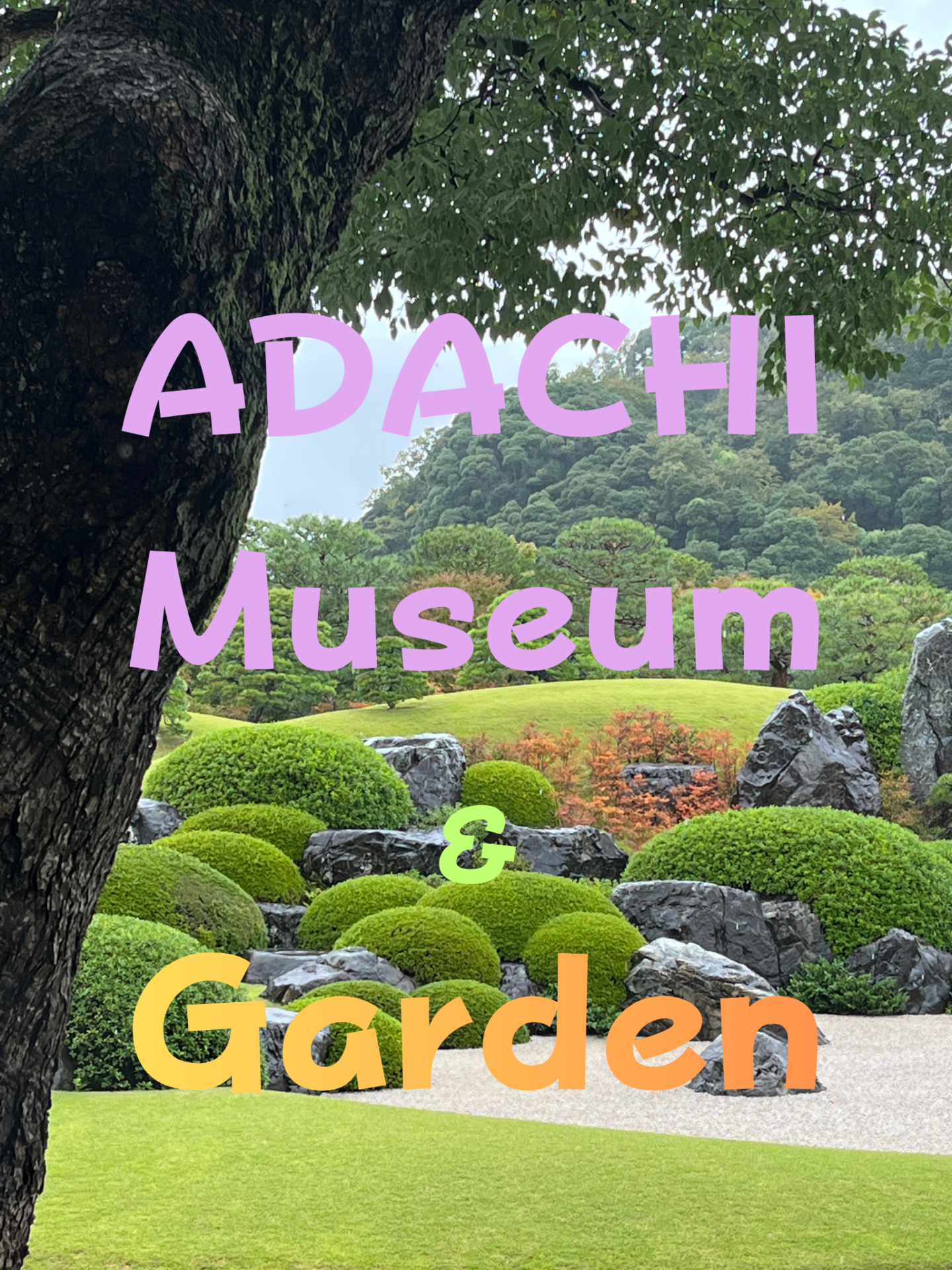
My long-awaited trip to Shimane Prefecture finally became a reality.
In early November, my wife and I flew from Haneda Airport to Izumo, making the most of our JAL mileage.
For our three-night stay, we chose the Toyoko Inn in front of Matsue Station—our go-to accommodation for domestic travel due to its convenient location and reasonable rates, which include a complimentary breakfast.
From Matsue to the Adachi Museum of Art
Our journey began early the next morning. We took the 8:01 AM local train from JR Matsue Station toward Yonago. Although the distance is short, the San-in Line is a single track, meaning the 20-minute ride felt a bit longer as we waited for oncoming trains at several stations.
Upon arriving at Yasugi Station, we hopped on the free shuttle bus provided by the museum. The bus stop is conveniently located just outside the station to the right. A small tip: when you purchase your museum ticket (2,300 yen for adults), you’ll need to pick up a numbered ticket for your return bus, so it’s best to decide your departure time in advance. While the admission might seem a bit high, the impeccable gardens and the world-class art collection make it well worth the price.
Step Into a Living Painting: The Dry Landscape Garden
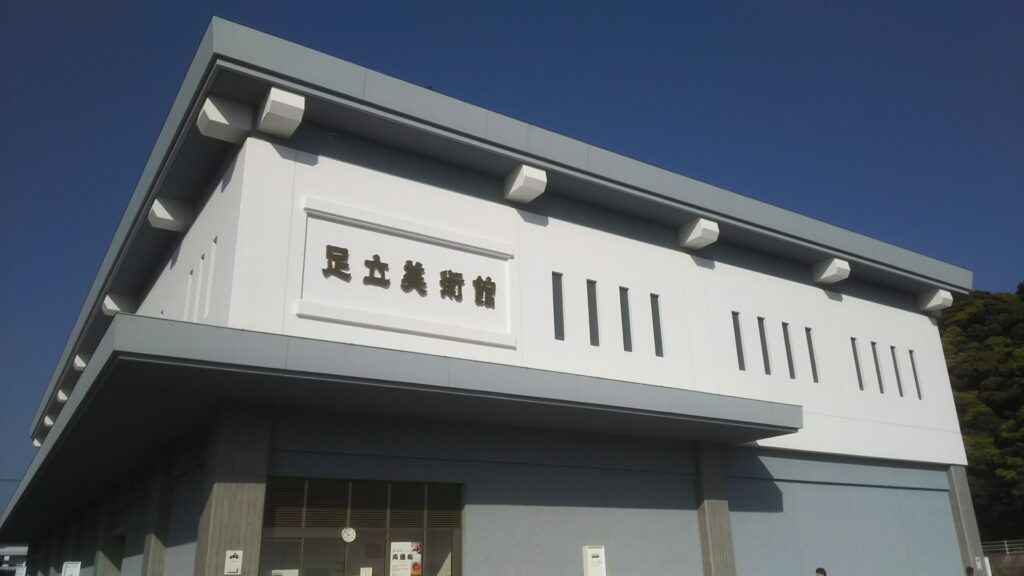
The Adachi Museum of Art is famous for two things: its breathtaking gardens and its collection of masterpieces by artists like Yokoyama Taikan and Kitaoji Rosanjin.
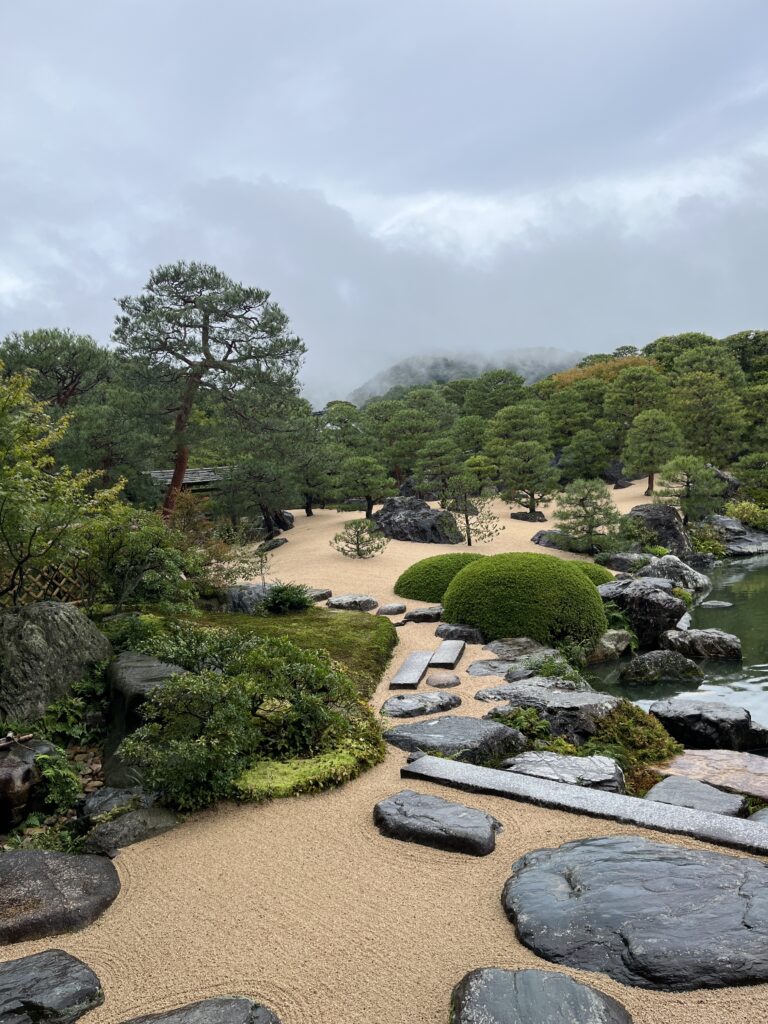
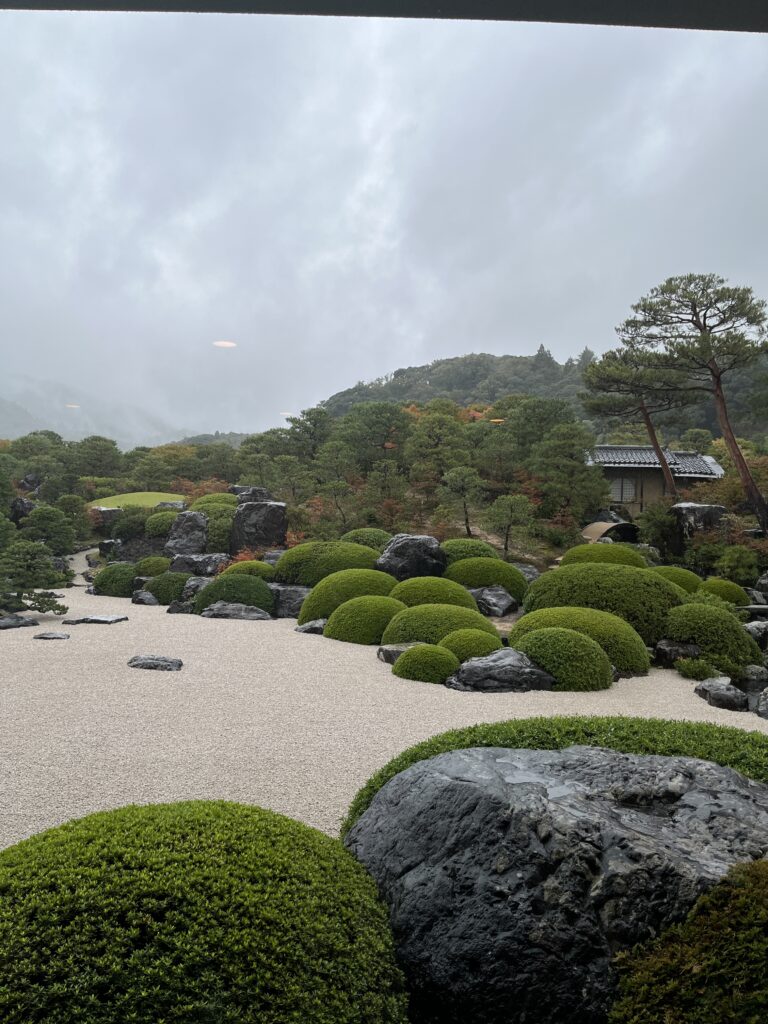
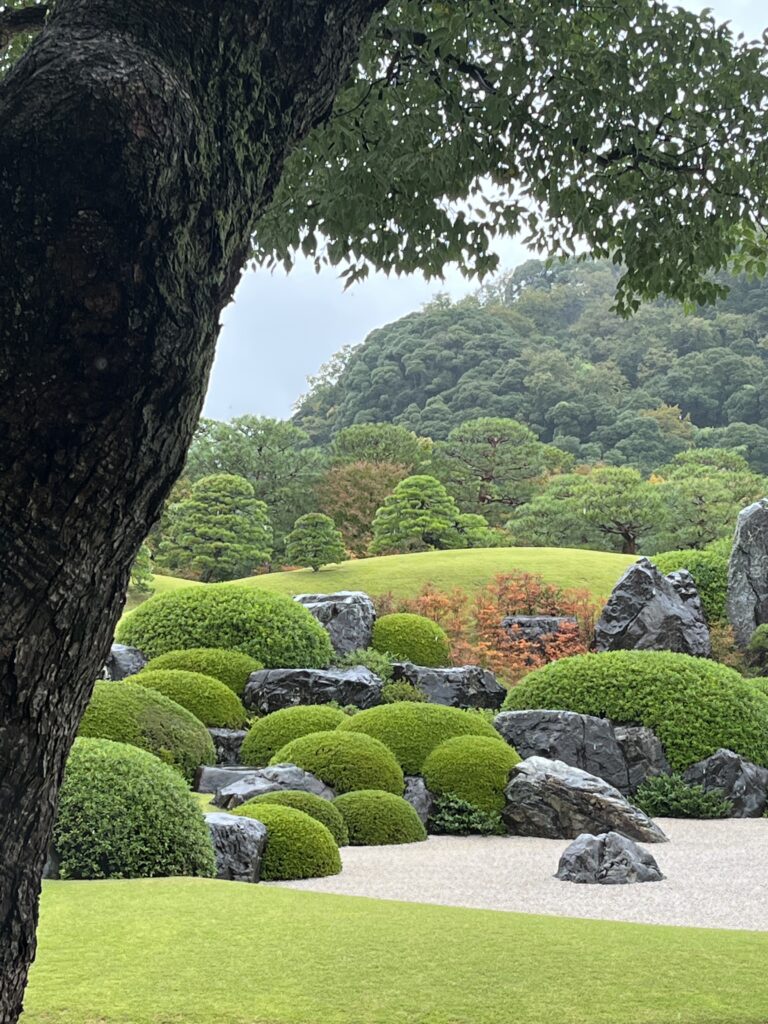
As we entered, we were immediately greeted by the iconic Dry Landscape Garden (Karesansui) through large glass windows. Despite the light rain that morning, the mist clinging to the distant mountains added a mystical, poetic charm to the scenery.
Beyond the panoramic dry landscape lies the “White Gravel and Pine Garden,” where the contrast of white sand and green pines is stunning. We even asked a fellow visitor to take a few photos of us against this beautiful backdrop—photography is permitted throughout the museum grounds.
“Tap the video! You’ll get a beautiful panoramic view of the garden.”
The Rosanjin and Yokoyama Taikan Collections
While the gardens are a major draw, the indoor galleries are equally captivating. We visited the Rosanjin Hall, which opened in 2020. It houses over 500 works by the legendary gourmand and artist Kitaoji Rosanjin, with about 120 pieces on permanent display.
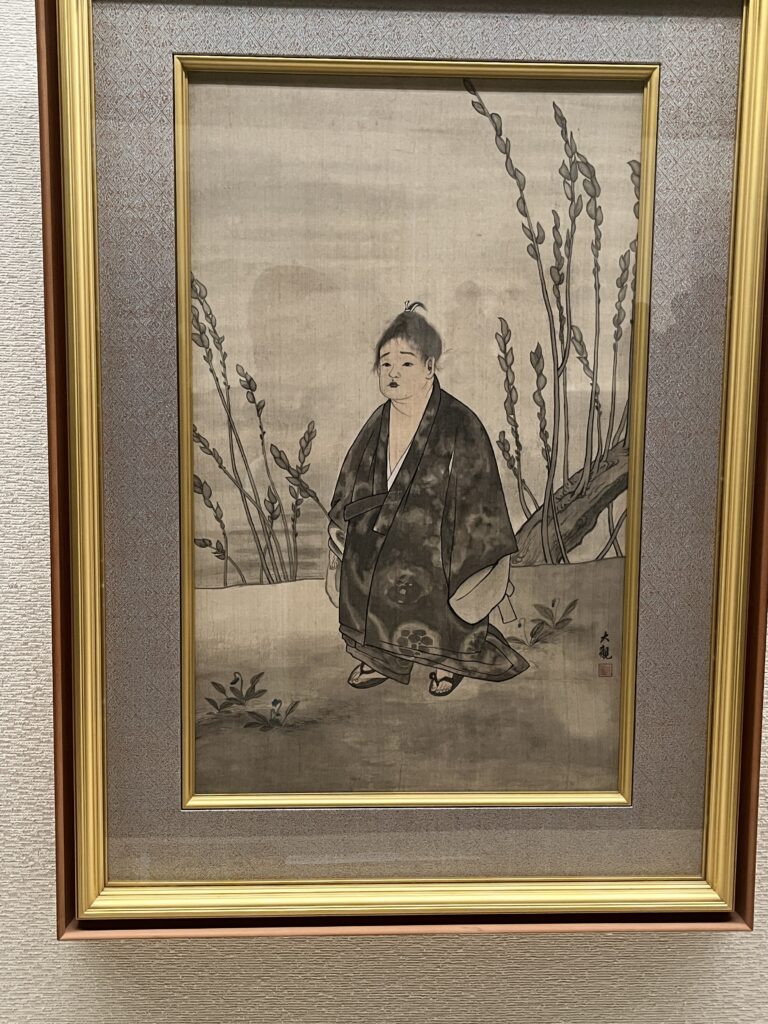
However, the highlight for many is the Yokoyama Taikan collection. The museum’s founder, Zenko Adachi, was deeply moved by Taikan’s work and spent his life collecting around 120 of his pieces. While “Autumn Leaves” is a masterpiece, I was particularly drawn to “Muga” (Selflessness), painted when Taikan was only 29. The innocent expression of the child in the painting reminded me of the “Kanzan Jittoku” I once saw at the National Palace Museum in Taipei—it was truly moving.
A Cultural Detour: Yasugibushi Performance Hall
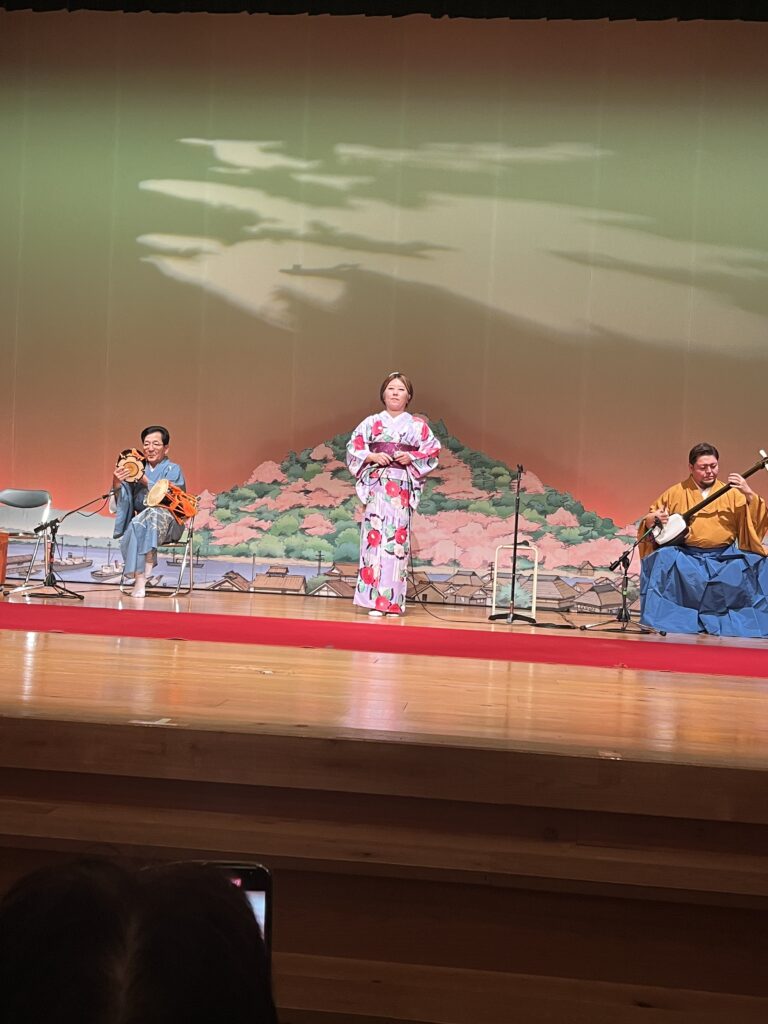
After immersing ourselves in art and nature, we walked about 200 meters to the Yasugibushi Performance Hall. We were lucky to catch a live performance of “Dojo-sukui” (Loach Scooping Dance).
The 40-minute show was a delight! Accompanied by the lively sounds of the shamisen and drums, the performers brought Japanese folk traditions to life. The “Dojo-sukui” dance was the highlight—full of humor and energy. It was a last-minute addition to our itinerary after a quick Google Maps search the night before, and I’m so glad we went!
Final Thoughts
Our first day in Izumo, visiting the birthplace of Zenko Adachi and experiencing the local culture of Yasugi, was a resounding success. Seeing the Adachi Museum in person is an entirely different experience from seeing it on TV—the scale and meticulous care of the gardens are something you must see with your own eyes. It was a perfect start to our journey.






コメント