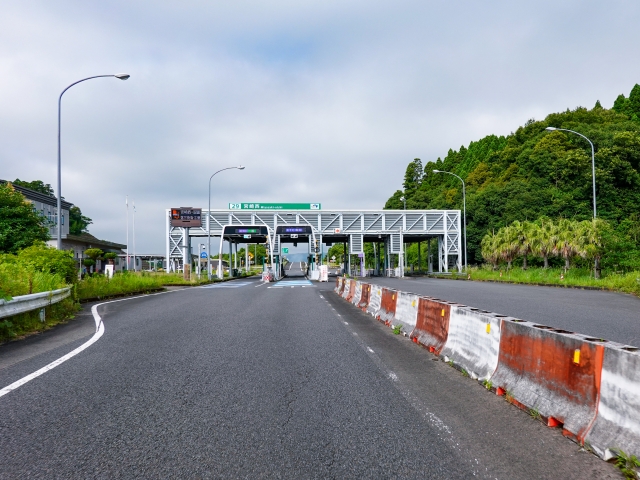
The grand finale of my first-ever Kyushu road trip brought me to Miyazaki City. Leaving Takachiho behind, the drive along the Higashi-Kyushu Expressway was incredibly smooth—no traffic, just a pleasant breeze and open road.
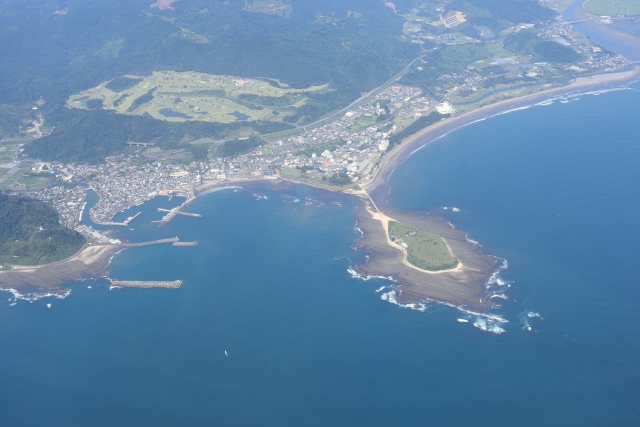
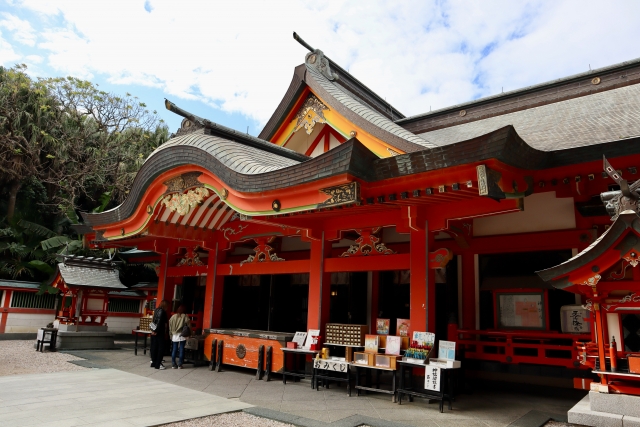
After arriving in Miyazaki City, we left our rental car at the hotel and spent a relaxing evening together. The next morning, we drove about an hour south to visit Aoshima Shrine. As you can see in the photos, the shrine sits on a tiny island (just 1.5km in circumference) that juts out into the ocean.
Because the shrine is dedicated to Yamasachihiko and Toyotamahime—the central figures of a famous Shinto love story—it’s a popular spot for young women and honeymooners. The bridge leading to the island is completely exposed to the sea on both sides. With no obstacles to block the wind, it can be quite a challenge to walk on gusty days! On the day of our visit, the wind was blowing at about 7–8 meters per second, and I saw a mother struggling a bit to push her stroller.
The deities enshrined here are Hikohohodemi-no-Mikoto (Yamasachihiko), Toyotamahime-no-Mikoto, and Shiotsutsu-no-Okami. They are patrons of matchmaking, safe childbirth, and maritime safety. Interestingly, it’s also where the Yomiuri Giants baseball team comes every year to pray for victory during their spring training camp.
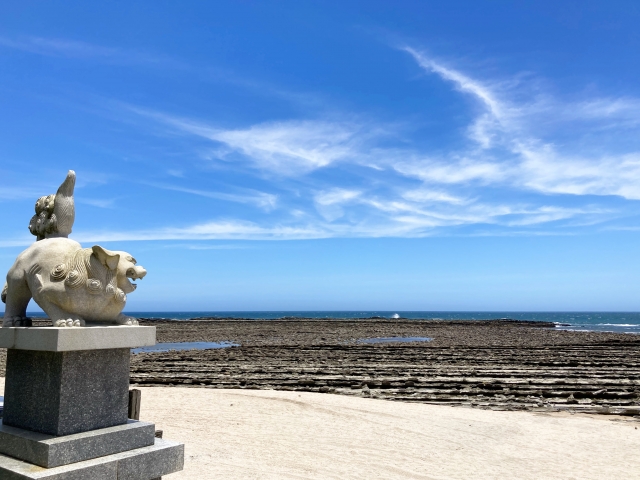
The surrounding coastline features the “Devil’s Washboard” (Oni no Sentaku-ita). These are rare, ripple-like rock formations that look exactly like old-fashioned wooden washboards. It’s a spectacular sight that is truly a “must-see.”
Geologically, these are wave-cut benches formed about 7 million years ago. Alternating layers of hard sandstone and soft mudstone (sedimentary rock) rose from the seabed. Over millions of years, the softer mudstone was eroded by the waves, leaving the harder sandstone ridges behind in this unique ribbed pattern.
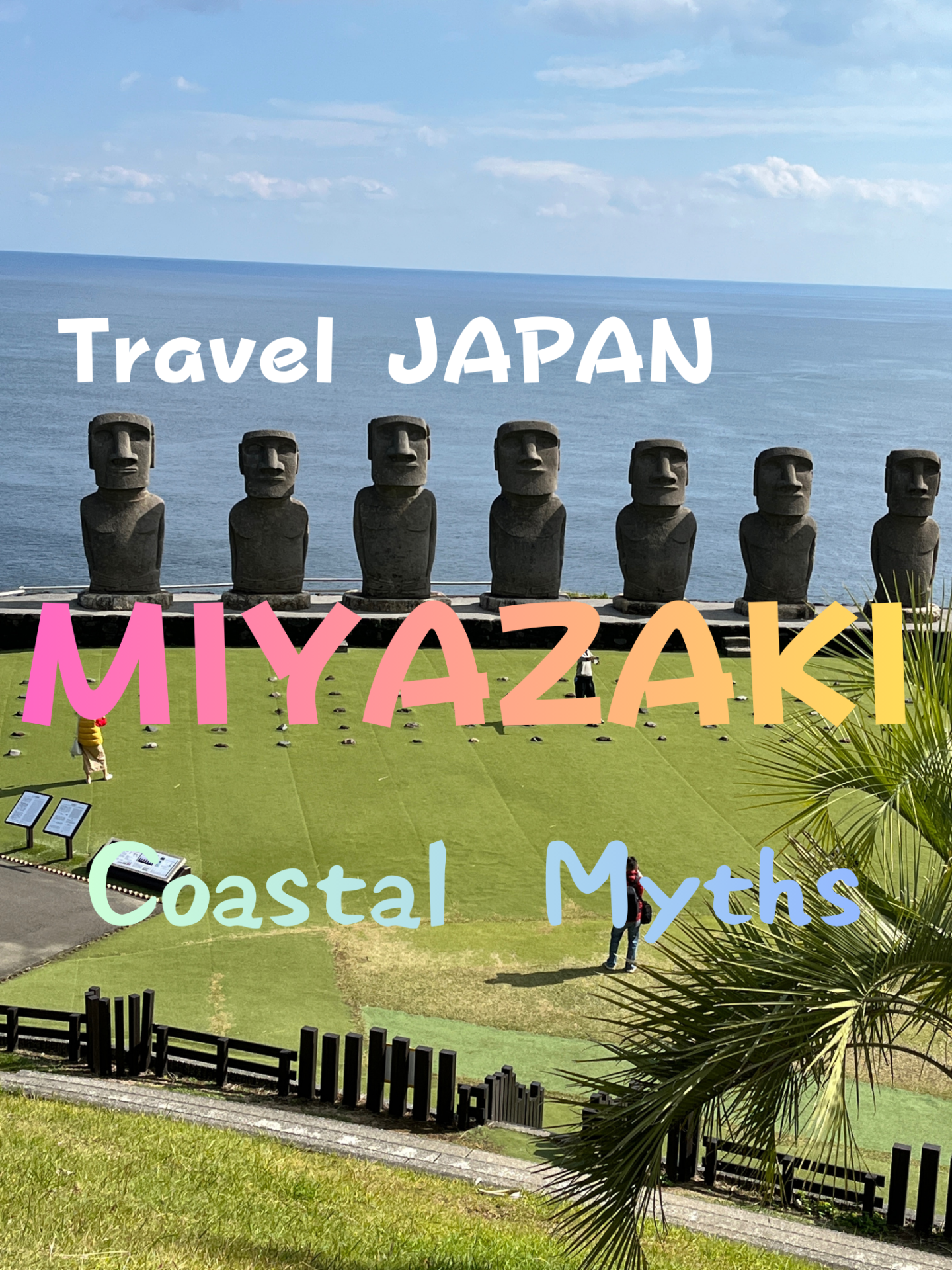
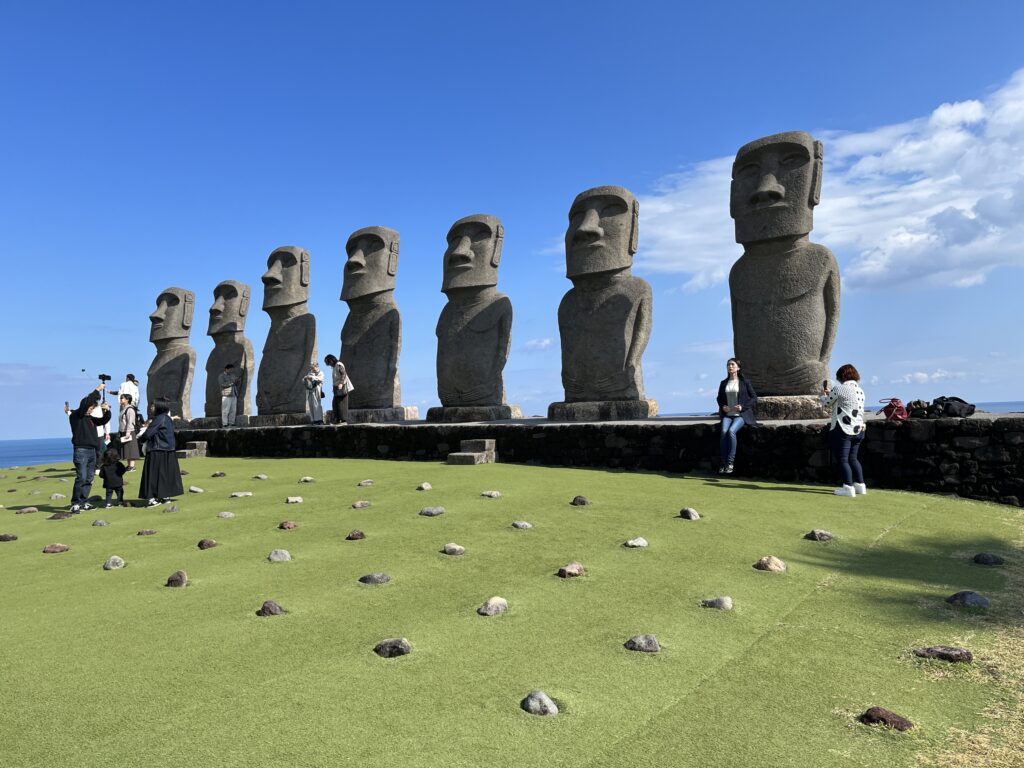
After Aoshima, we headed further south along the warm Nichinan Coast to Sun Messe Nichinan. Here, you’ll find magnificent replicas of the Moai statues from Easter Island. Standing against the backdrop of the blue Pacific, these seven statues make you feel as if you’ve been.transported to the middle of Polynesia.
Did you know that “Moai” carries a beautiful meaning? “Mo” means “future” and “Ai” means “to live”—so together, they represent “Living for the Future.” Much like the Seven Lucky Gods of Japan or the deities of Greek mythology, each statue has its own “jinx” or special blessing. The central statue is thethe guardian of “World Peace.”
You can find the specific meanings for each statue on the sign at the entrance (see photo below).
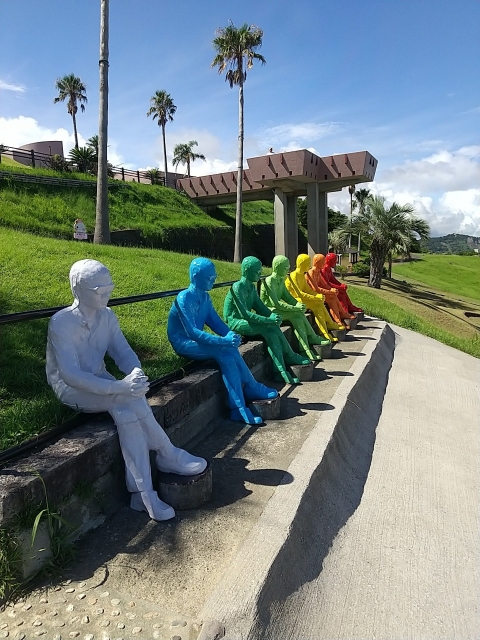
One of the most fun spots was a row of colorful, seated statues further up the hill. They reminded me of Rodin’s “The Thinker,” looking down over the Moai. Many tourists were sitting between them, mimicking the pose for photos—and of course, we couldn’t resist joining in! (Laughs)
While the park is operated by a religious organization, its core theme is world peace. Whether you enjoy hiking the trails or renting a small cart to zip around the hills, it’s a well-designed park that is well worth the 800-yen admission fee.
This visit to Miyazaki marked the end of our 7-day, 6-night journey through Kyushu. From Nagasaki and Kumamoto to Aso, Takachiho, and finally Miyazaki, every stop was filled with incredible sights and delicious cuisine. It was a truly fruitful journey.


コメント