
On Friday, April 10th, blessed with beautiful weather, I took a drive to visit Zakimi Castle Ruins, a World Heritage site located in Yomitan Village in the central part of Okinawa Main Island.
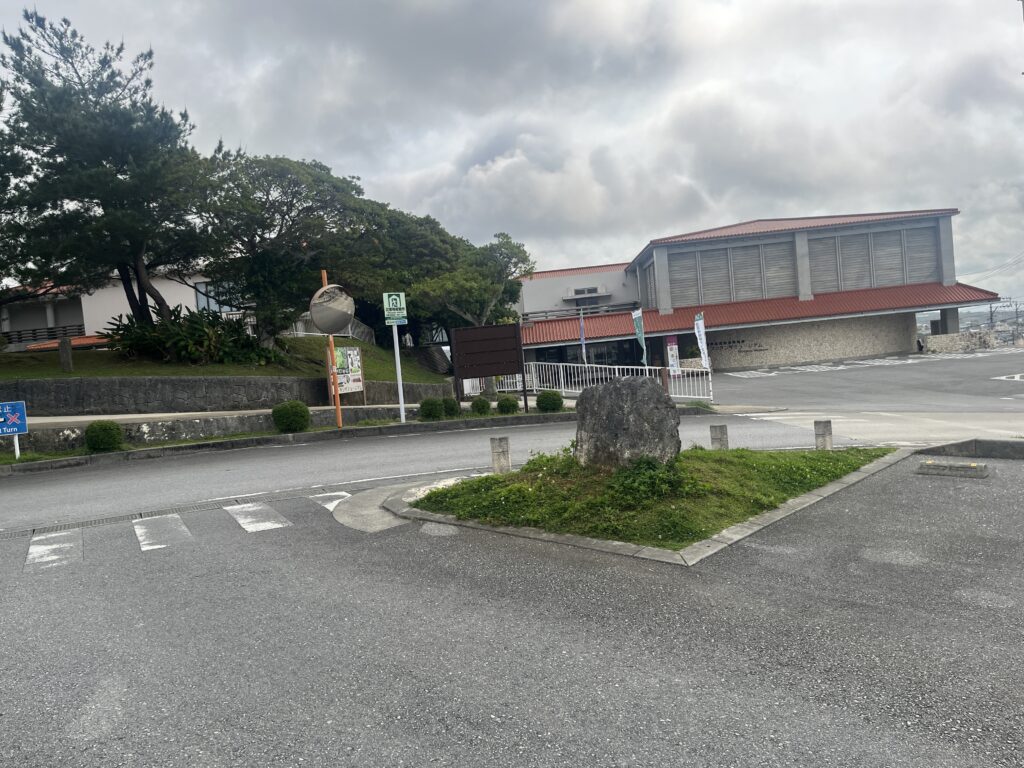
I set off around 8:30 AM. Taking the bypass that runs along the coast from Naha through Urasoe and Ginowan, I headed north. Passing through Chatan and Kadena, I arrived in Yomitan Village in just over an hour. Since it was a weekday, the roads were clear, and I reached my destination surprisingly quickly.
History of Zakimi Castle
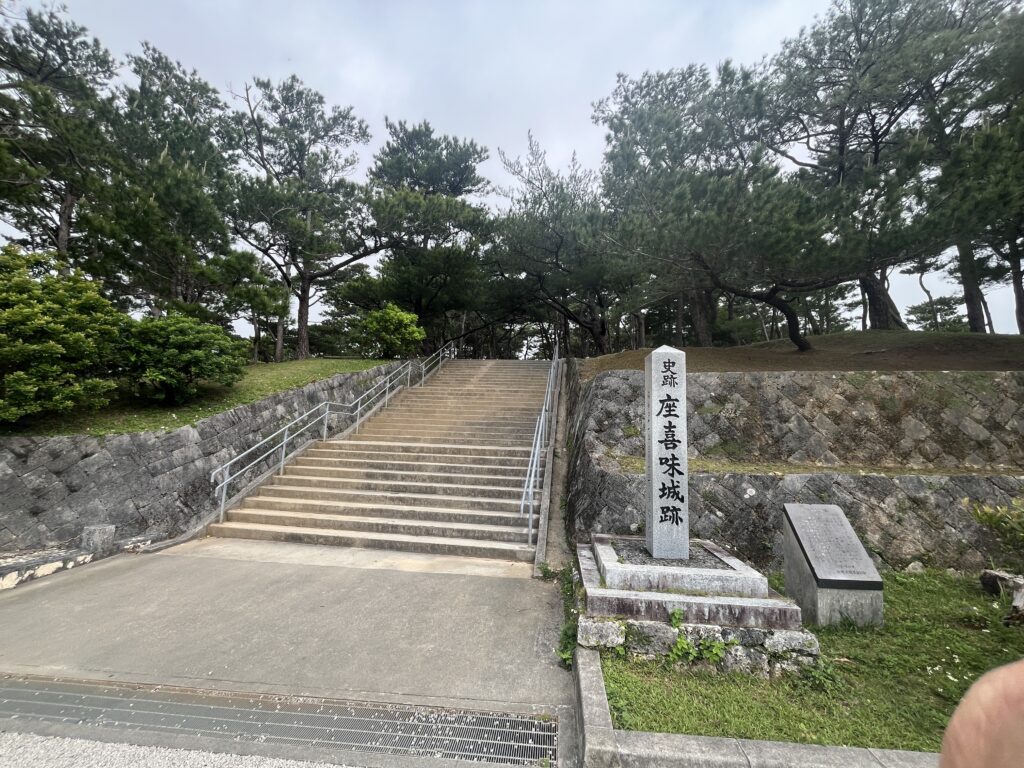
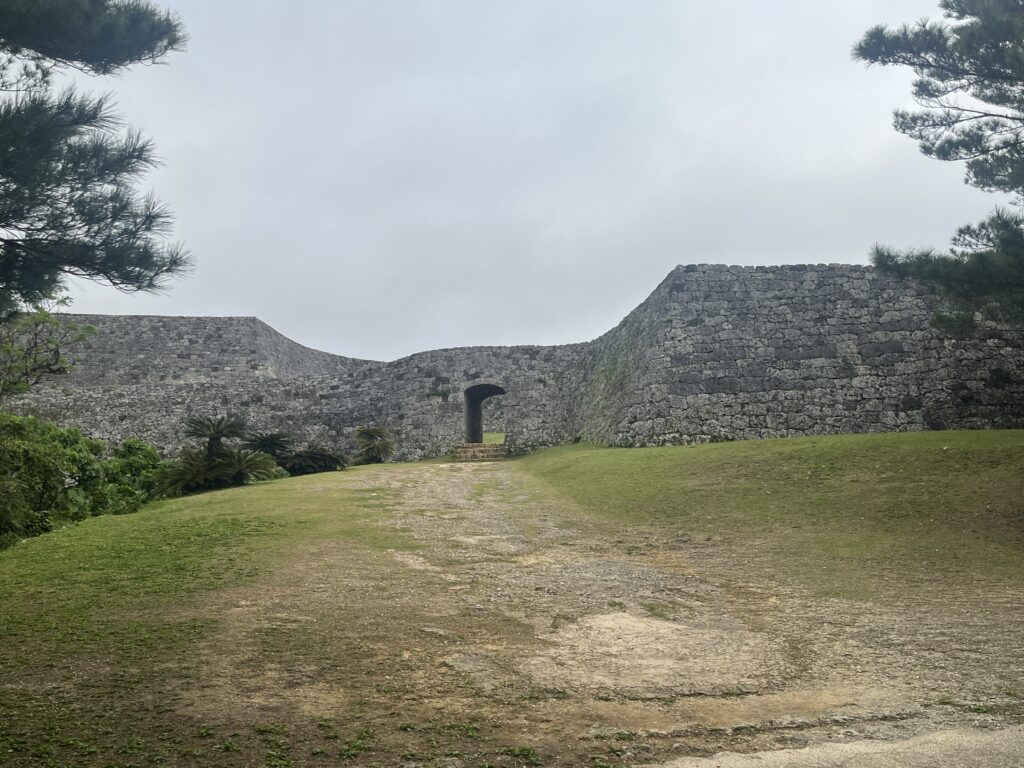
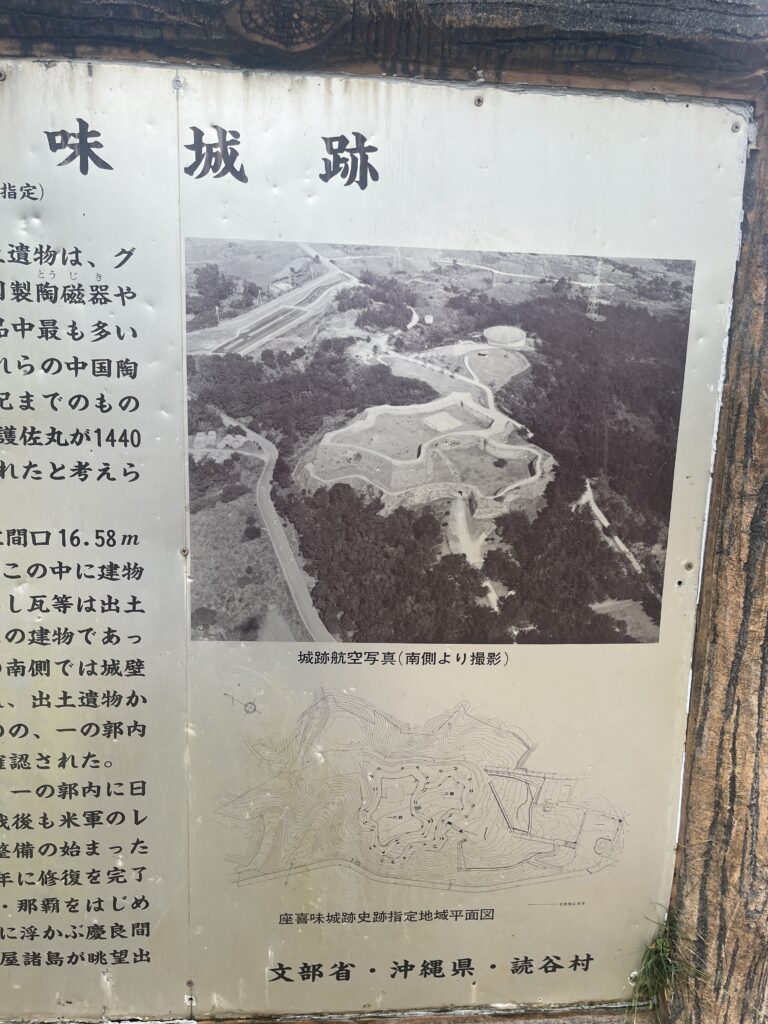
Zakimi Castle (Zakimi-jo) is a “Gusuku” (Okinawan castle) built in the early 15th century by Gosamaru, a legendary commander of the Ryukyu Kingdom. Situated on a hill about 125 meters above sea level in Yomitan Village, it served as a vital military fortress to monitor the Chuzan King’s court and keep a watchful eye on northern forces.
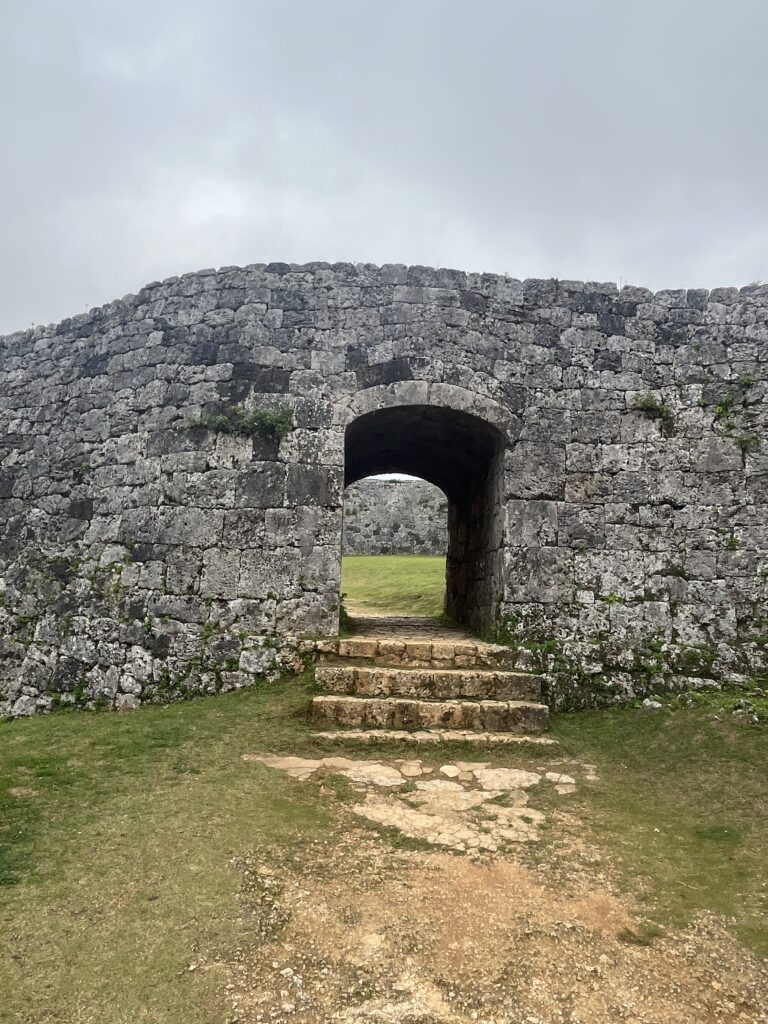
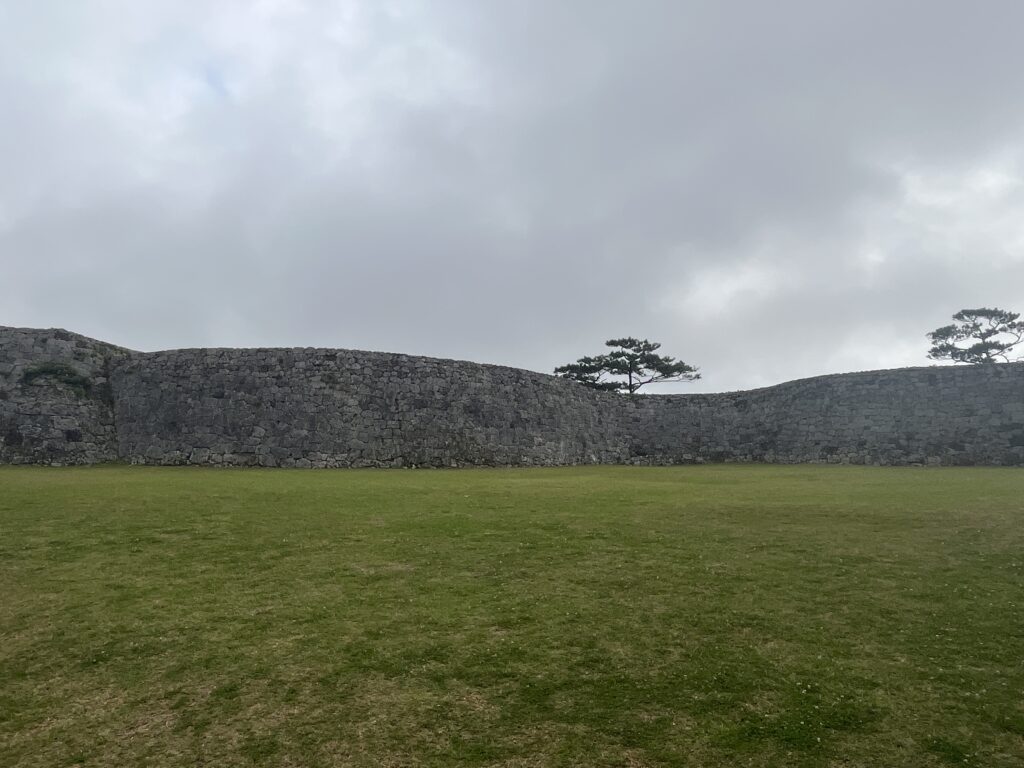
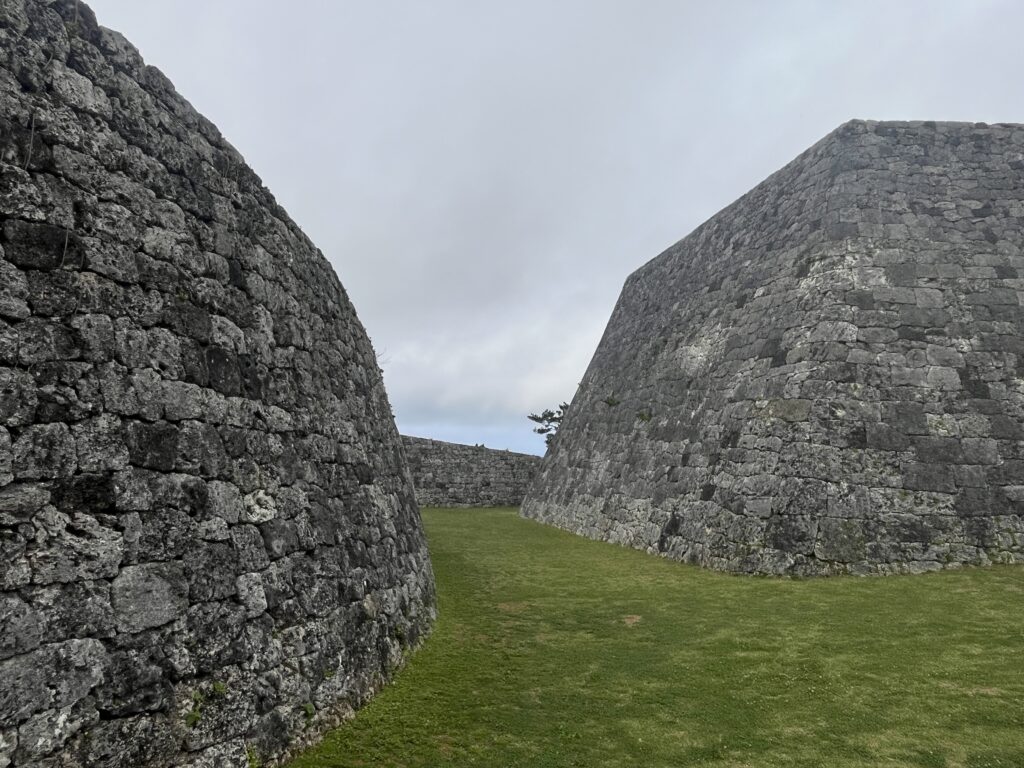
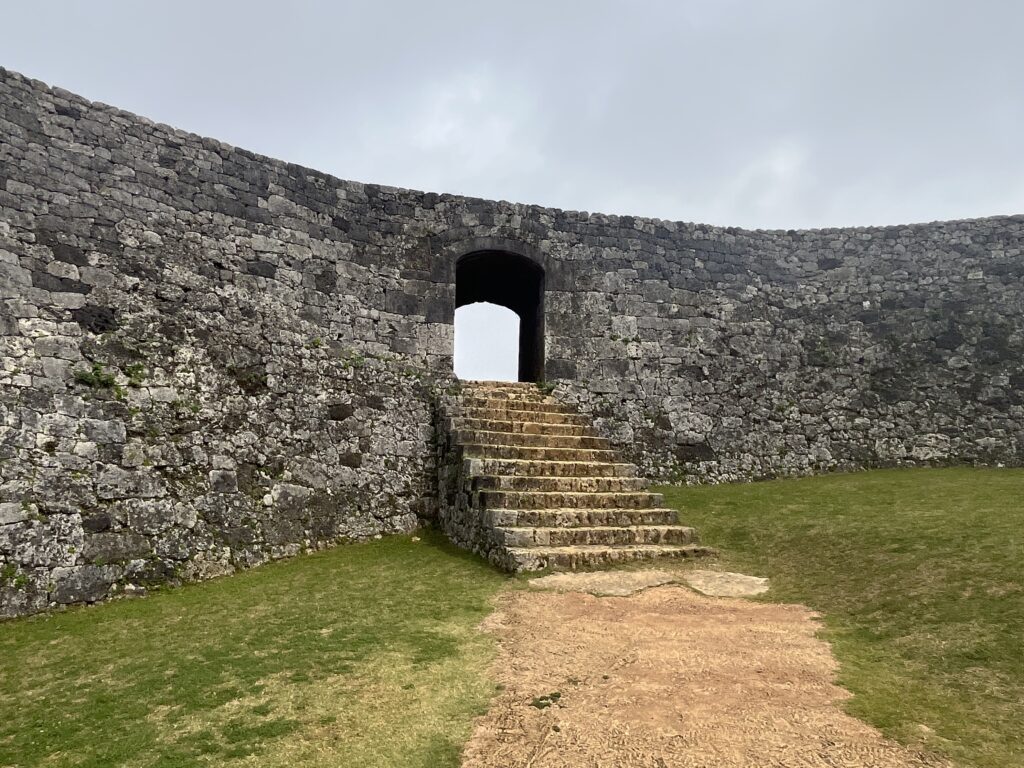
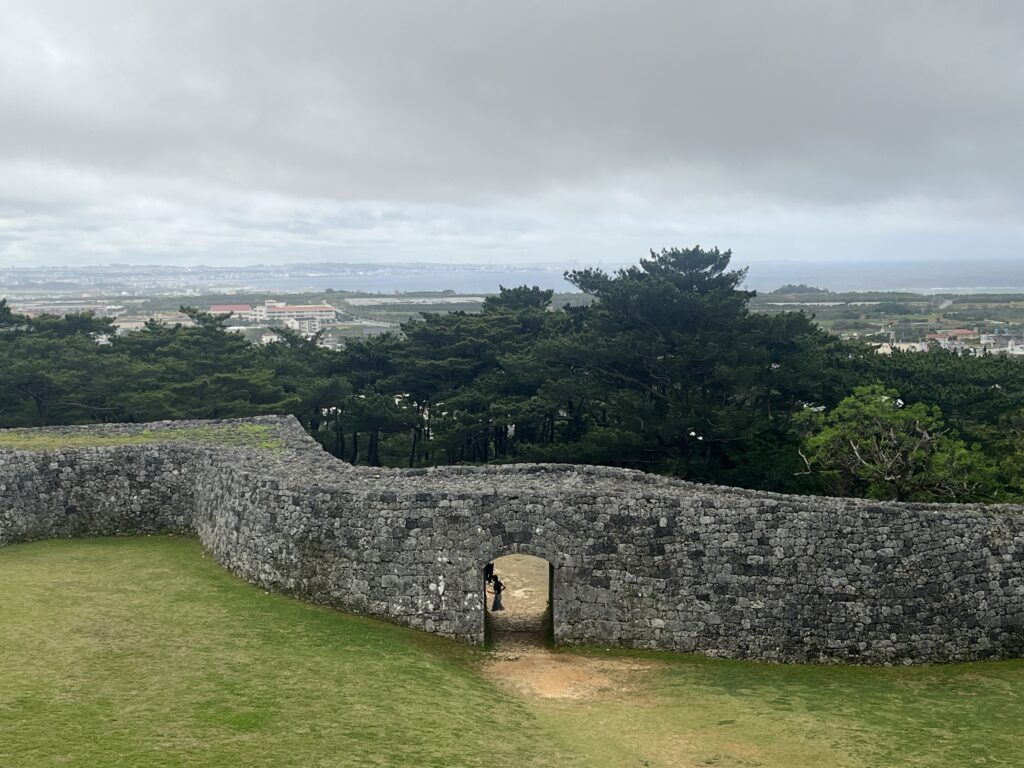
The castle’s most striking features are its arched stone gates—said to be the oldest in Okinawa—and its castle walls that trace beautiful, undulating curves like a folding screen. These curves were a brilliant feat of engineering, designed both to reinforce the fragile ground and to eliminate military blind spots for defending against enemies.
During World War II, the site served as a Japanese military base, and after the war, it was used as a U.S. military radar station. With Okinawa’s reversion to Japan in 1972, it was designated a National Historic Site. In 2000, it was registered as a UNESCO World Heritage Site as part of the “Gusuku Sites and Related Properties of the Kingdom of Ryukyu.” Today, it is renowned for its sophisticated stonework technology and the breathtaking panoramic views of the East China Sea.
Enter the lower part of the castle grounds
The beautifully curved fortress has only one narrow gate. This was, of course, a deliberate design to prevent many enemies from rushing in at once. Passing through the gate, you first enter a lower courtyard.
Ascend to the upper level of the castle
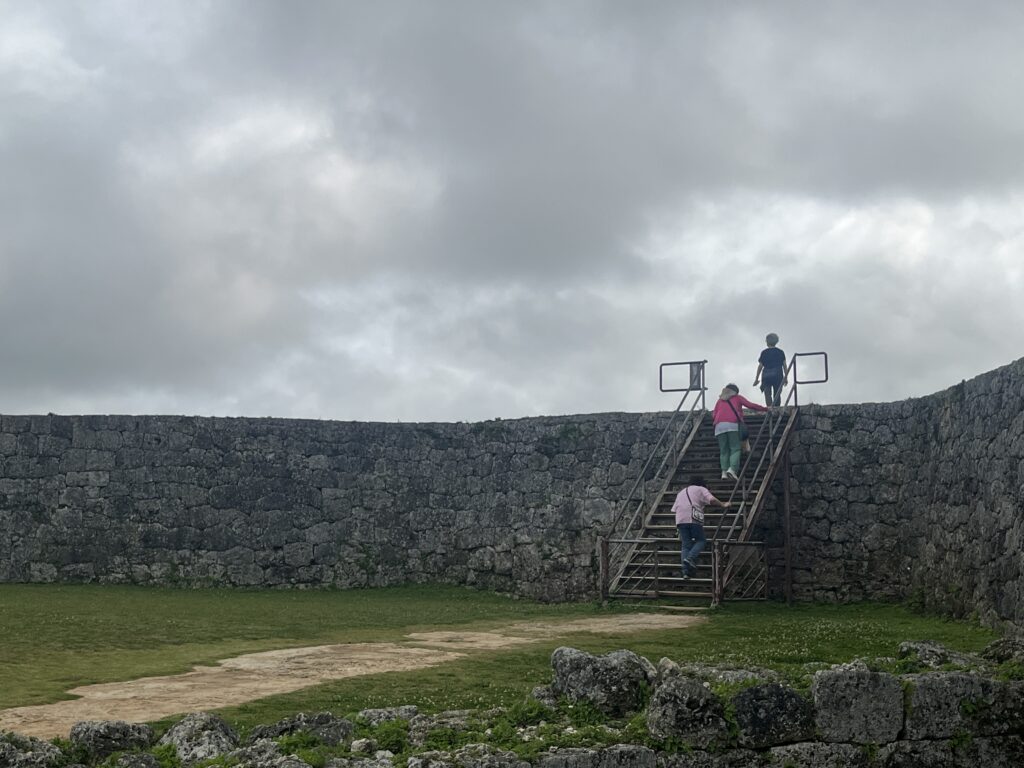
Passing through the narrow gate to the upper tier, you’ll find another open plaza. The castle walls surrounding this upper area are accessible via simple stairs.
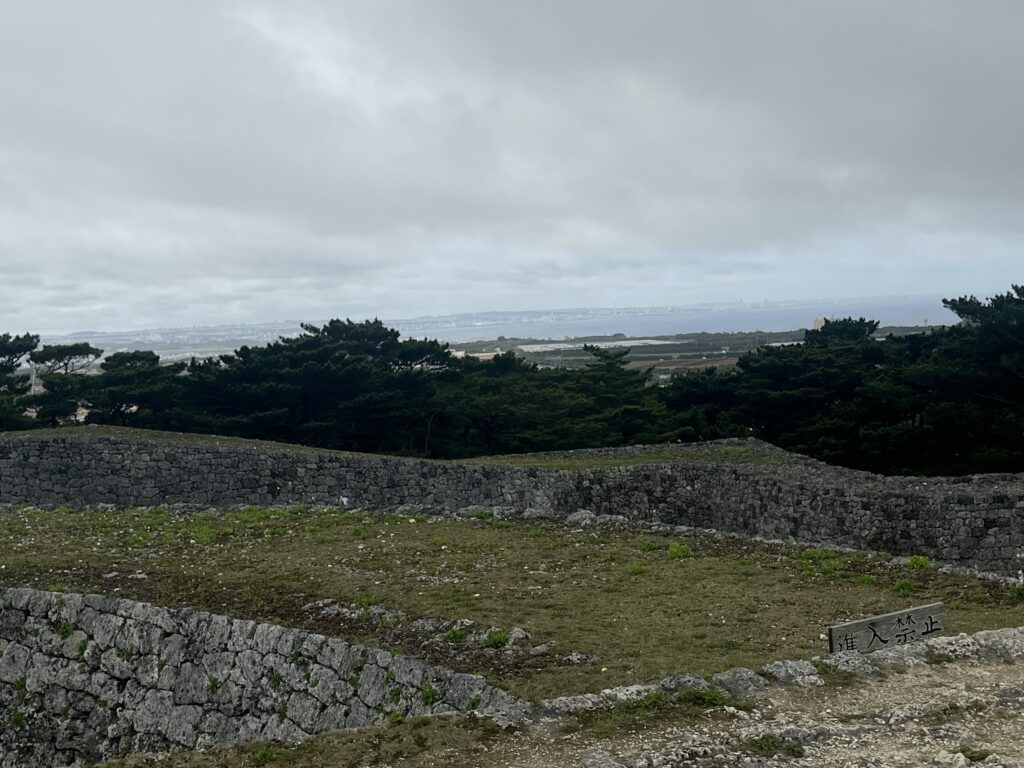
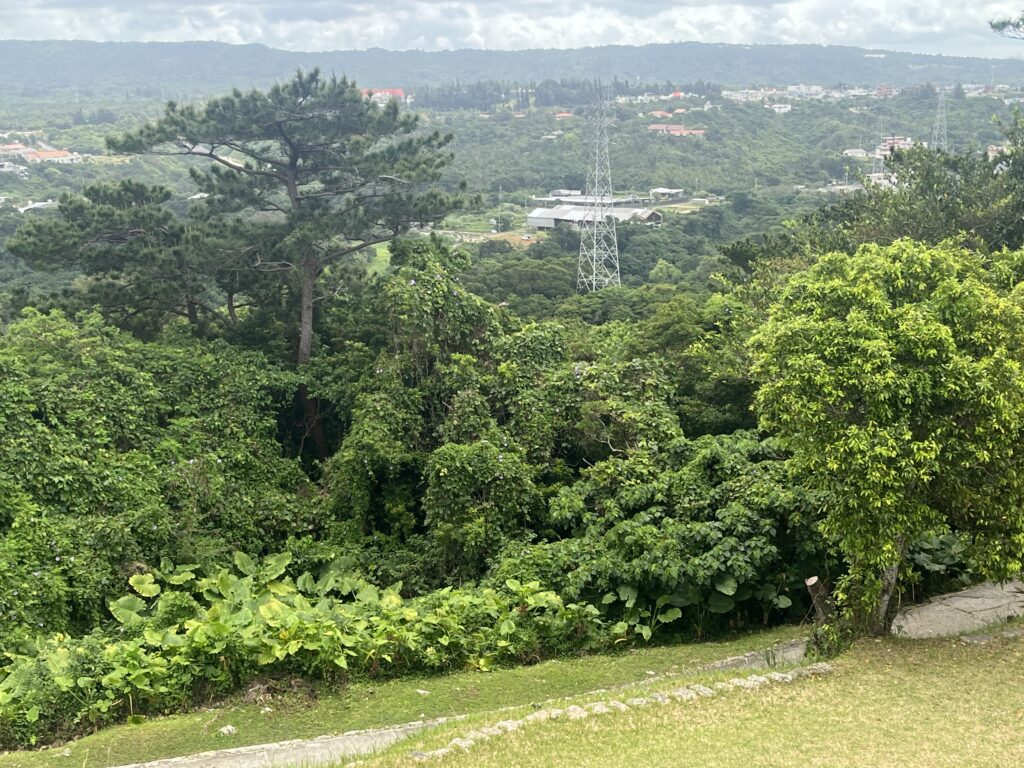
Looking down from the top of the walls, lush green trees spread across the base of the cliffs, with the villages of Yomitan unfolding in the distance beyond.
The wisdom of the great general Gosamaru
I learned about two clever defensive traps designed by Gosamaru, the master of Ryukyuan castle construction, from a staff member at the Yomitan Village Office.
Gosamaru’s Trap #1: Inside the small stone gate, there is a thin, wedge-shaped stone. If that stone is pulled out, the entire gate collapses, blocking the entrance and preventing further intrusion.
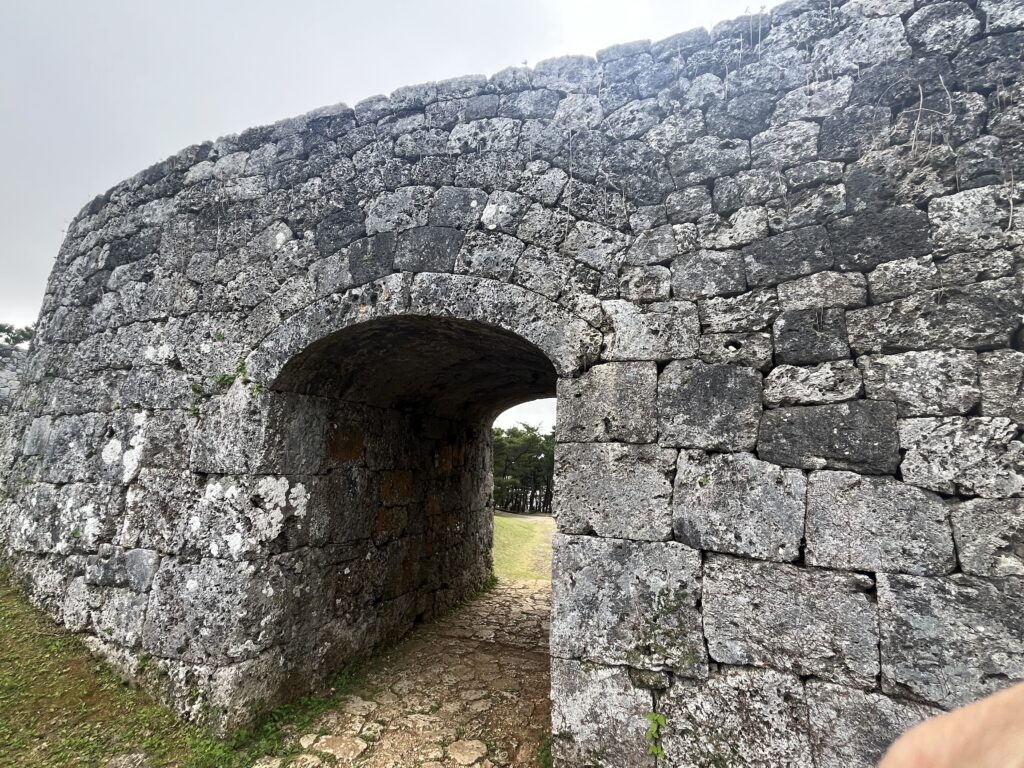
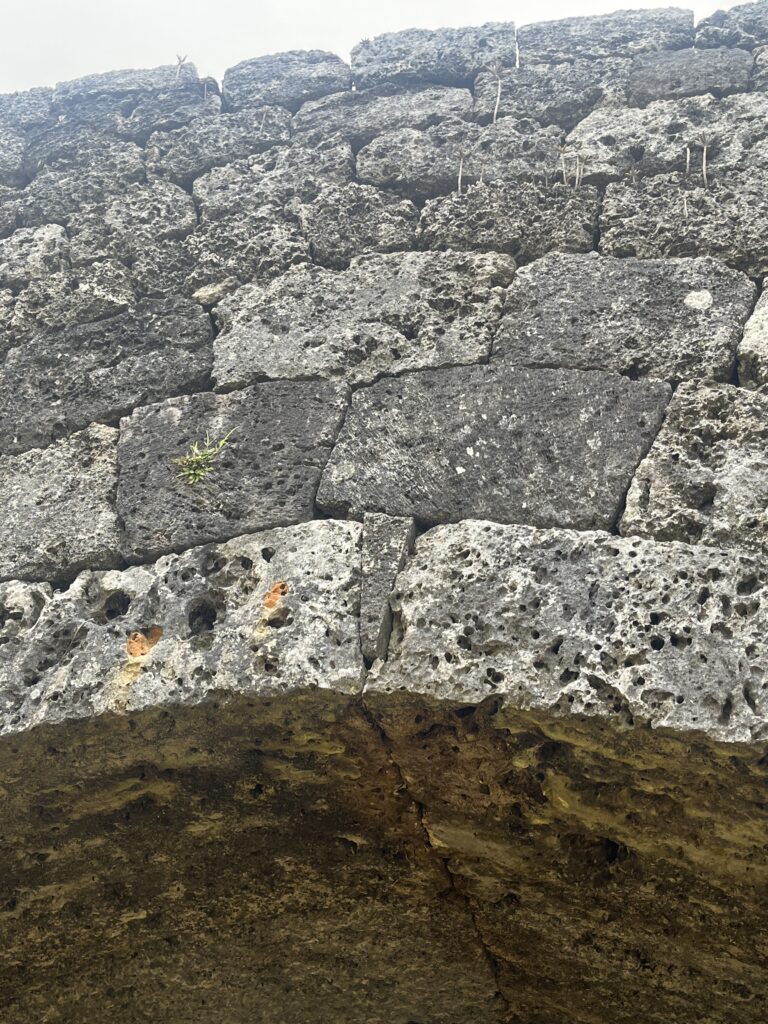
Gosamaru’s Trap #2: As enemies rush into the lower courtyard, they see only one narrow passage leading to the left. Naturally, the invaders charge toward that single path—only to find themselves in a dead-end cul-de-sac! From there, the defenders would look down from the surrounding walls and wipe out the trapped enemy forces.
Concluding remarks
The ruins of this famous castle are only about an hour’s drive from Naha. It is one of the rare sites among Okinawa’s Gusuku where visitors can actually climb onto the artistically curved walls. Almost everyone there was climbing the ladder-like stairs to enjoy the surrounding views.
Perhaps because the stone ruins require little maintenance compared to wooden buildings, there is no admission fee to enter! (lol)
Combined with nearby spots like Cape Zanpa and Yachimun no Sato (Pottery Village), it’s a perfect destination for a day trip. If you ever enjoy a drive on Okinawa Main Island, I highly recommend paying a visit!









Comments