
The year 2025 was truly a landmark year for films set in Okinawa. It began with the February release of Kanasando, followed by Army on the Tree in July, Takarajima in September, and a limited theatrical run of Kaze no Majimu. As a devoted fan of both Okinawa and cinema, I was eagerly looking forward to seeing all four.
Unfortunately, Kaze no Majimu—a story following a young woman living in Naha who struggles to produce Okinawa’s first rum from sugarcane on Minamidaito Island—was only shown in a select few theaters. Unable to catch it at my local cinema, I am now keeping my fingers crossed for its future release on streaming platforms like Amazon Prime or Netflix.
Upon realizing that two of these four films, Kanasando and Army on the Tree, were set on IE-Island—located just across the water from Motobu, home to the Churaumi Aquarium—I made a firm resolution: I must visit Ie Island this year.
Heading to IE-Island by Ferry from Motobu Port
Ie Island is a small island with a circumference of only 22 km. However, I had heard that it has many steep slopes, and for a person of my age, touring the island’s sights by bicycle would be far too strenuous. Therefore, I decided to take my car on the ferry for a driving tour.
If you plan to bring a car, advance reservations are a must. Although the ferry is quite large, with a capacity of over 80 vehicles, it is very popular and fills up quickly. On weekdays, many commercial vehicles use the service, so surprisingly, Sundays are often less crowded. (Motobu Port Ferry Reservations: 0980-47-3940 / 7:30 AM – 5:30 PM)
On Sunday, April 19th, I left Naha City just after 6:00 AM. I took the expressway to the Kyoda exit, passed through Nago City, and drove carefully along the beautiful coastline, arriving at the port by 7:40 AM. I was a bit early, but as they say, “Better safe than sorry!”
Shortly after, the first ferry of the day, which had departed from Ie Port at 8:00 AM, appeared off the coast of Motobu 20 minutes later. Here is the view of the ferry entering the harbor and docking.
Just as I was beginning to settle in and enjoy the beautiful scenery from the deck, an announcement came over the speakers after only 20 minutes: “We will begin disembarkation in 10 minutes. Passengers with vehicles, please return to your cars.” I headed back to my rental car inside the ferry and waited for the ramp to lower. At 9:30 AM, right on schedule, I rolled onto the shores of Ie Island. My island tour was finally about to begin!
Heading to Lily Field Park, as seen in the film “Kanasando”
It’s about a 15-minute drive from Ie Port to Lily Field Park—the place that left such a lasting impression in the movie Kanasando with its Easter lilies in full bloom.
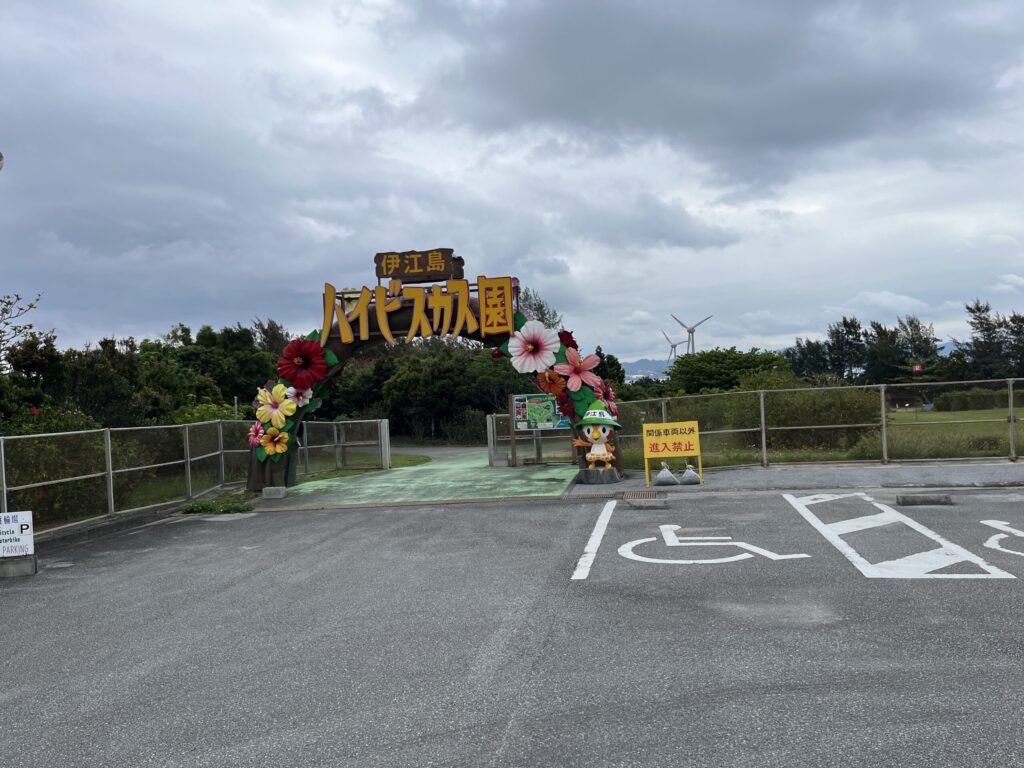
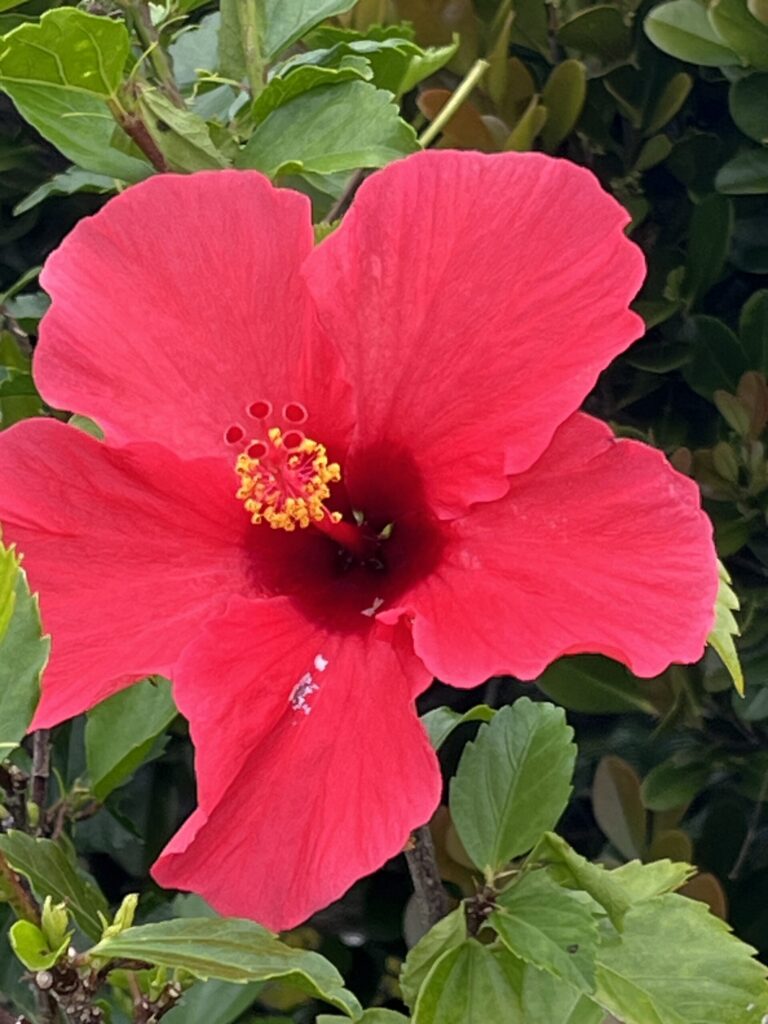
On the way to the park, the striking “Hibiscus Garden” 🌺 also caught my eye, adding a beautiful splash of color to the drive.
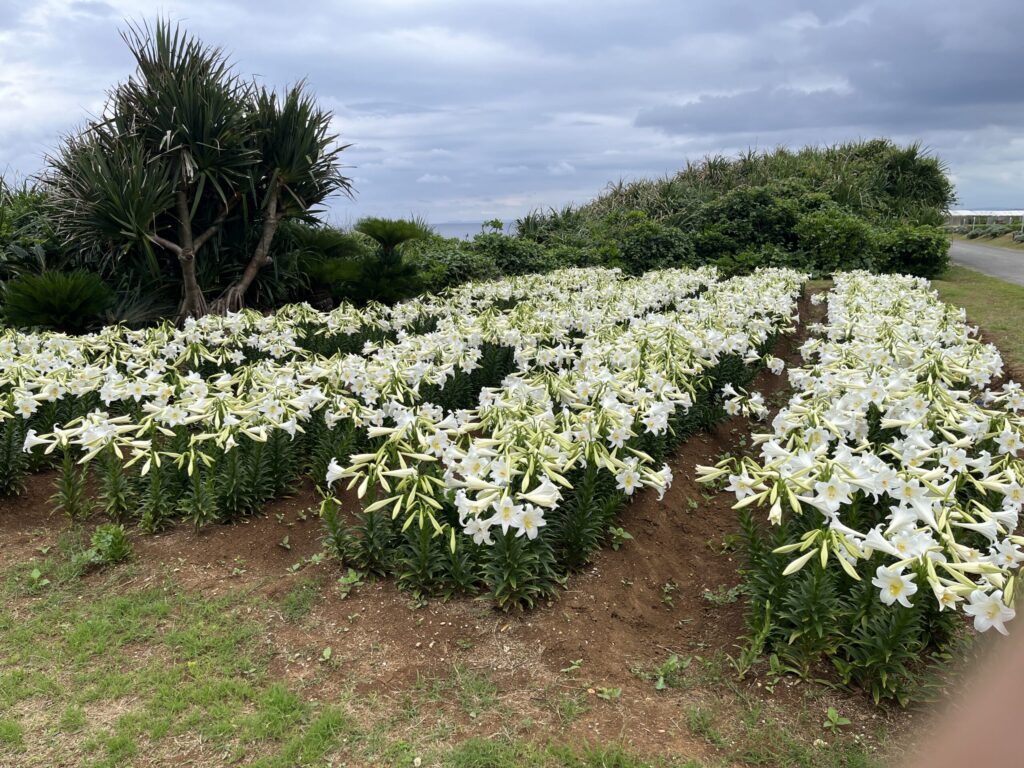
At Lily Field Park, thousands of lilies—including various international species—were in nearly full bloom, standing side by side in a dense, breathtaking display.
What truly caught my eye, above all else, was the field of Easter lilies—the very same scene that graced the screen in the film Kanasando.
Heading to the Symbol of Ie Island: Mount Tacchu (Gusuku)
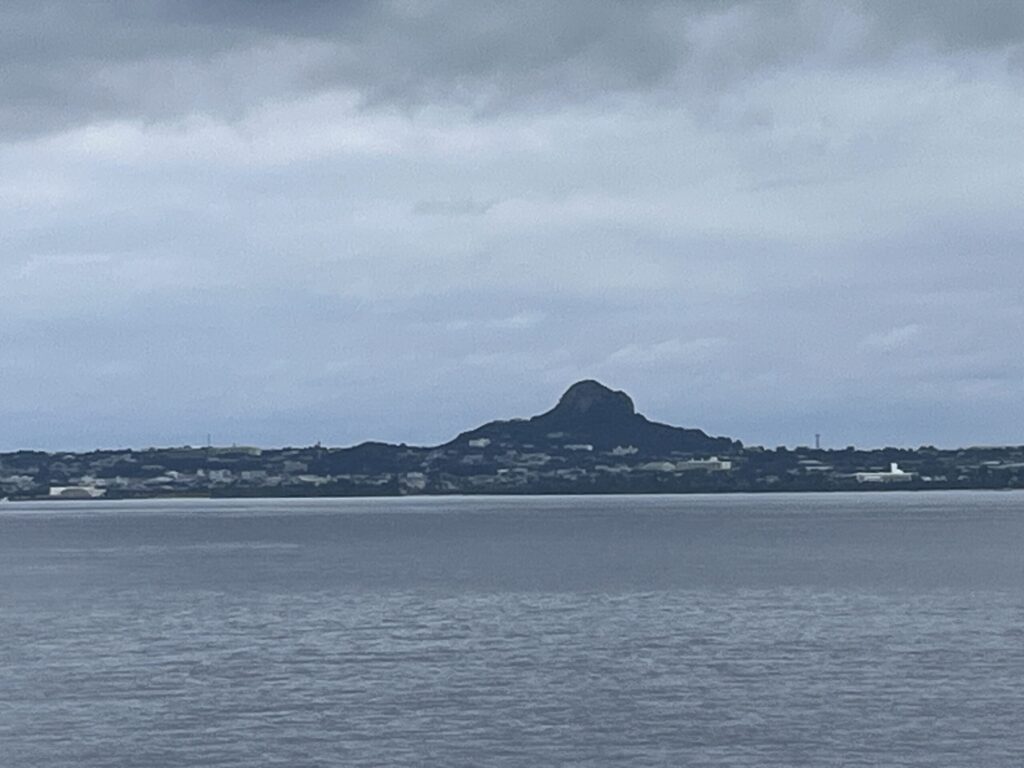
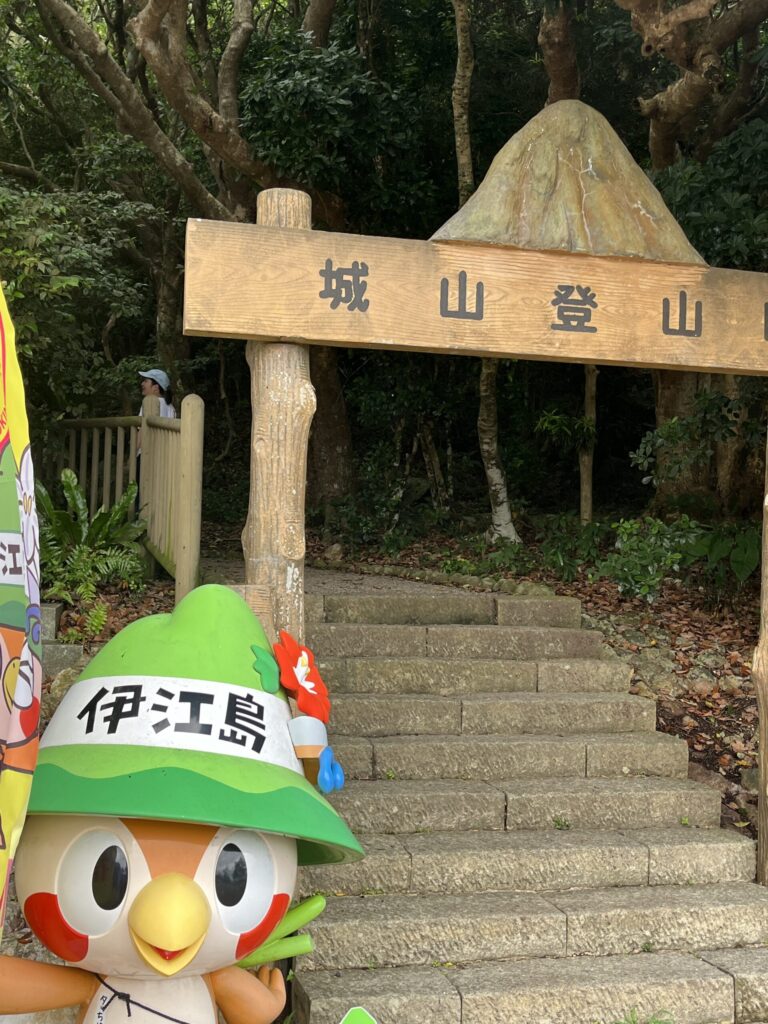
After immersing myself in the beauty of the lilies, I headed toward the iconic symbol of Ie Island, Mount Tacchu (Mount Gusuku). It was just over a 10-minute drive from Lily Field Park to the rest area located on the mountainside.
While its summit stands at an elevation of 172.2 meters—making it feel more like a hill than a mountain—its unique, rugged surface is unlike anything else in the world. It is truly a “miraculous rock.”
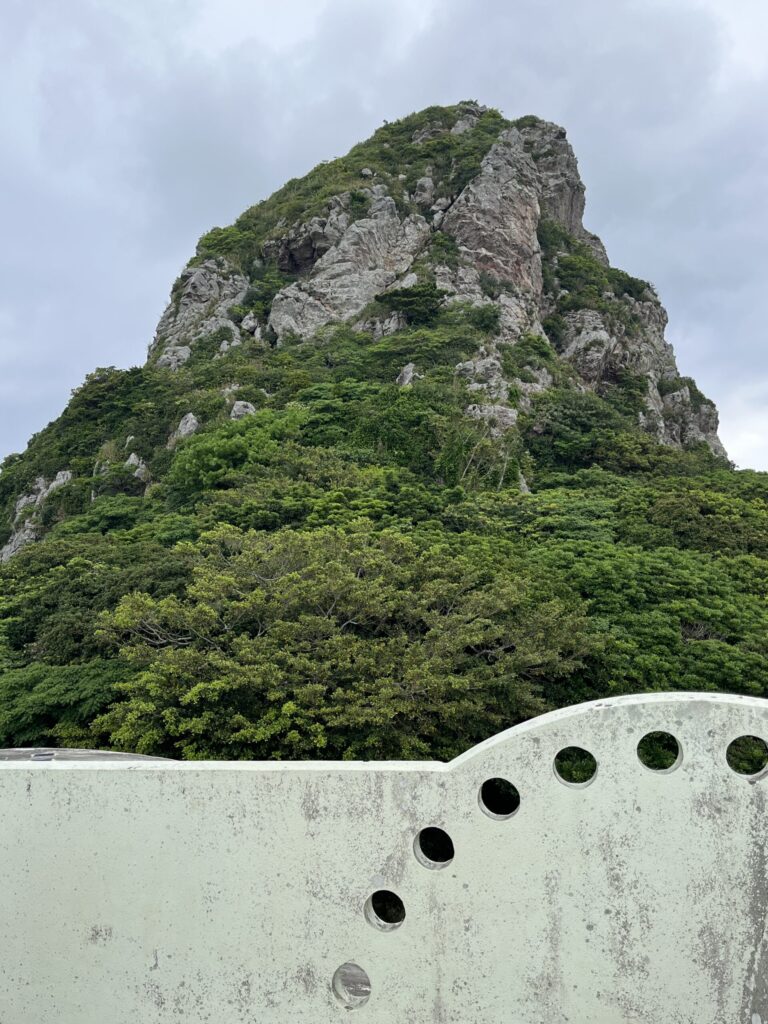
Overview of Mount Tacchu (Mount Gusuku)
This rocky peak rising from the center of Ie Island has long been a landmark for seafarers. Its distinct silhouette can be clearly seen even from the northern part of mainland Okinawa, such as the Motobu Peninsula.
- Geological Significance (Off-scrap Structure) The mountain was formed by a geological phenomenon known as an “Off-scrap Structure,” which is extremely rare worldwide. It was created when a part of an older bedrock (approx. 200 million years old) peeled off and rode on top of a younger bedrock (approx. 70 million years old). Ie Island is said to be the only place on Earth where this phenomenon can be observed above ground.
- Faith and History The mountain is home to several Utaki (sacred sites) at its base and on its slopes, cherished as a sanctuary to pray for safe voyages and bountiful harvests. It is also tied to local legends, such as the story of the powerful “Untama Giru” leaving his footprints here.
- Tourism and the View A well-maintained staircase leads from the base to the summit, taking about 15 to 20 minutes to climb. From the top, you can enjoy a 360-degree panoramic view of the entire island, the Kerama Islands, and northern mainland Okinawa.
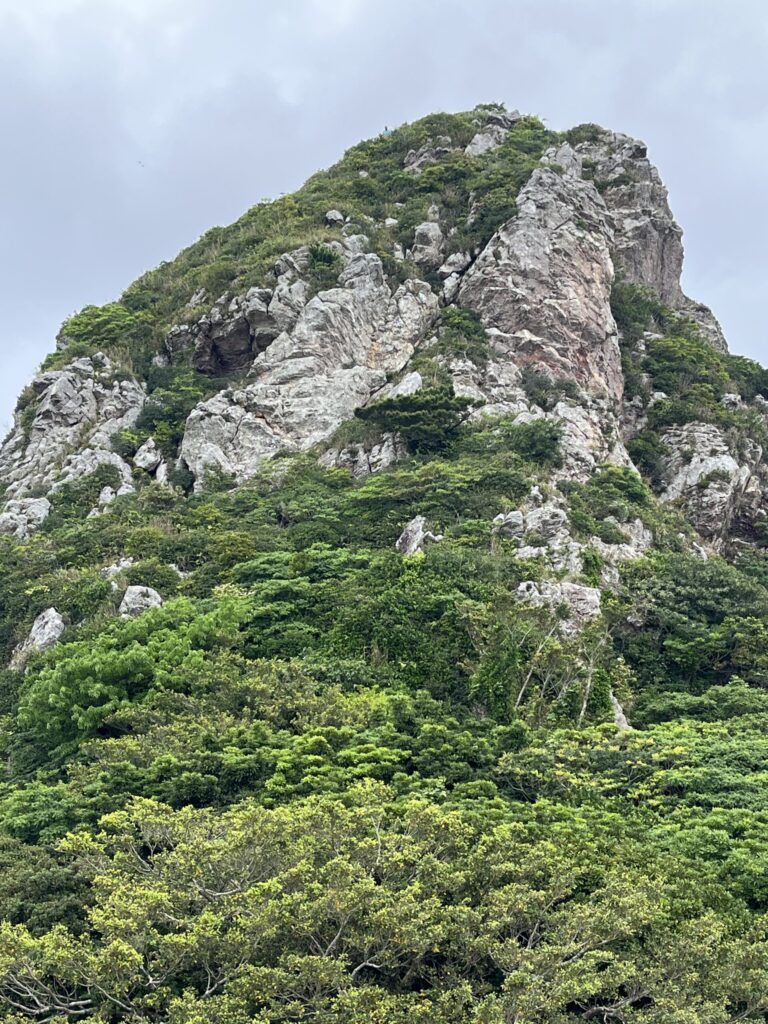
The trailhead to the summit was right in front of the rest area. Despite the steep, rocky incline, I heard the stairs were equipped with chain ropes for support. So, I pushed my 82-year-old body to take on the challenge. Breathing heavily but steadily, I reached the summit in about 20 minutes.
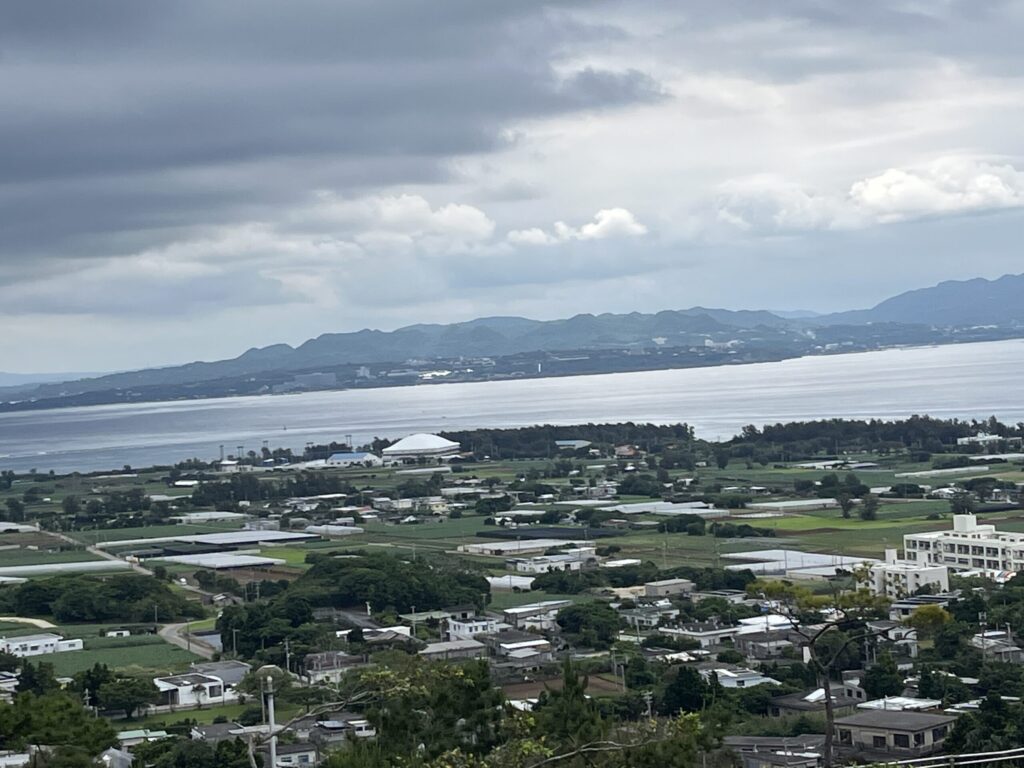
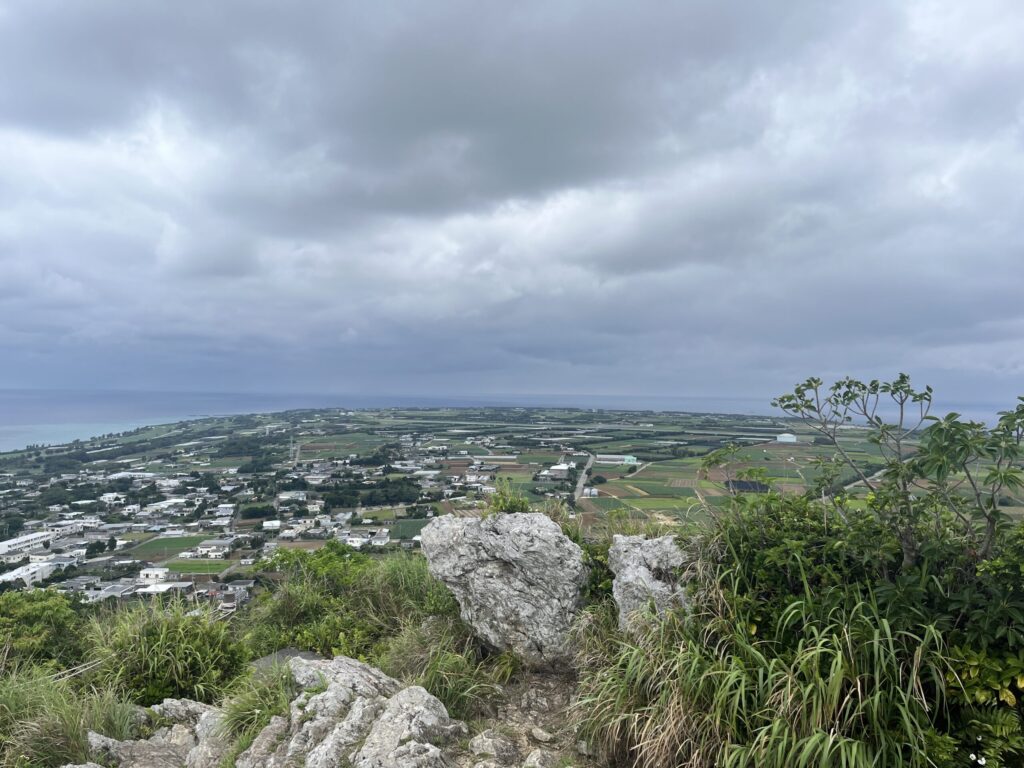
From the top, a 360-degree panorama unfolded, centered on Ie Island floating in the East China Sea. I looked out toward Motobu Town and gazed over the U.S. military runway—a sight that truly defines the island’s landscape.
Visiting the Location of the Film “Army on the Tree”
The film Army on the Tree, starring Shinichi Tsutsumi and Yuki Yamada, left a powerful impression on me when it was released last July.
It is the true story of two soldiers who, following the fierce battle on Ie Island, survived for two years hidden atop a massive Banyan (Gajumaru) tree, unaware that the war had ended. While I had heard the stories of Shoichi Yokoi in Guam and Hiroo Onoda in Lubang Island, learning that such a story took place right here in Japan was deeply moving. I wonder why this historical fact hasn’t become a bigger topic of conversation.
Knowing that Miisi Park—the filming location—is near the port, I made it my final stop. In Miisi Park, the giant Banyan tree transplanted for the movie still spreads its lush branches. Conveying the tension of the film, this tree has become a new symbol of the island.
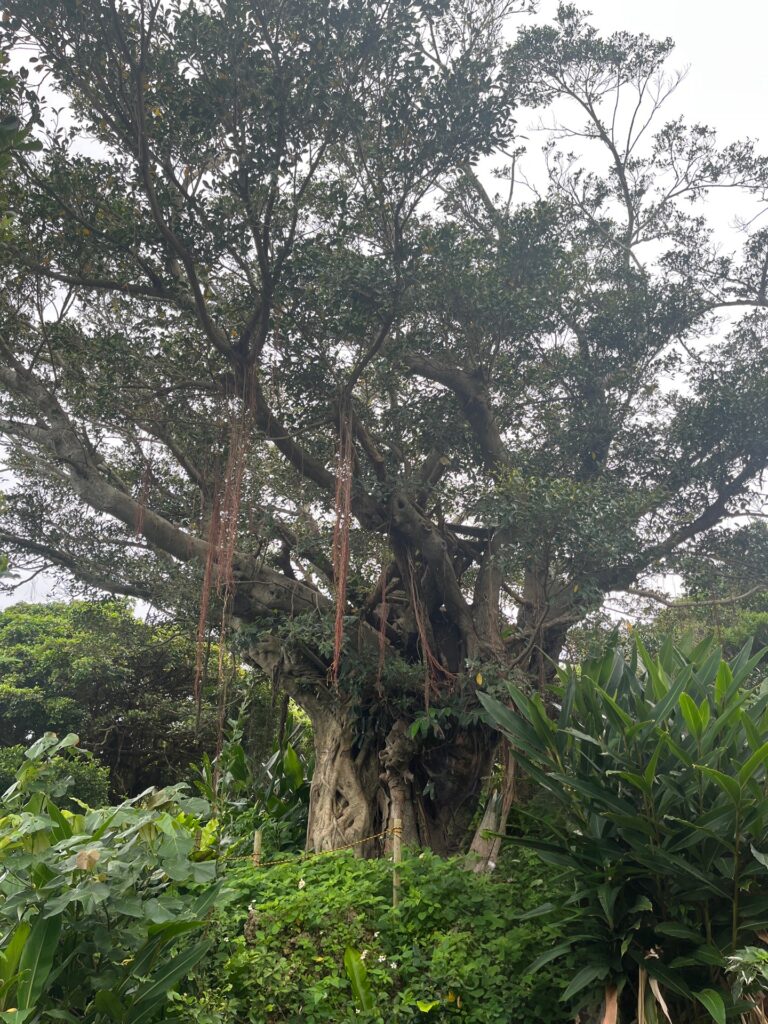
Meanwhile, the “real” tree where the two soldiers actually hid—the Niiban Banyan Tree—collapsed from its roots during a violent typhoon in 2023 and was at risk of dying. However, thanks to the strong will of the residents to keep the memory of peace alive, restoration work was carried out. Today, it stands once again, sprouting new buds.
The “replicated tree” left by the film and the “historical tree” revived through hardship—these two giants on Ie Island silently speak to us of the strength of life that must be passed down to future generations.
Returning to Motobu Port by Ferry
Having completed my sightseeing on schedule, I took the afternoon ferry back to Motobu Port.
As the ferry swayed, leaving Mount Tacchu behind, the shadows of the hibiscus flowers and the stories I encountered at the film locations came back vividly. It was a day filled with the satisfaction of a well-planned journey and the lingering sadness of saying goodbye. I left the island with both feelings in my heart—a truly fruitful day.





Comments